
 AI Governance
 Data Centers
 Drones
 Climate
 Privacy
 2026 Maine Senate
 Bob Dylan
Data Centers Meet Local Limits
Coverage from Waco Tribune-Herald, Fierce Network, and others
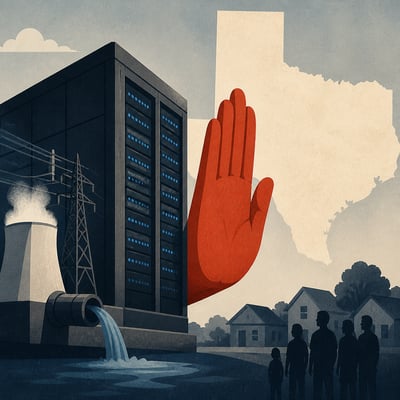
Data center expansion is facing growing political and community resistance in Texas and other U.
S. states. Texas has paused or slowed approvals while agencies audit proposed grid connections, power and water use, cooling systems, incentives, ownership, and local impacts; President Donald Trump has criticized the pause while defending the economic benefits of new facilities. The dispute could lengthen permitting timelines, increase developer obligations for grid infrastructure, and reshape how states and communities evaluate large projects.
If you read one thing
It offers the clearest broad introduction to the Texas conflict between data-center growth, grid reliability, water, and community concerns.
The counter-case
It presents the restriction-and-cost-allocation side through Texas audits, developer infrastructure obligations, and rising public opposition.
Best explainer
It explains how community resistance is reshaping data-center locations, power strategies, and facility design without necessarily stopping expansion.
Policy is shifting from incentives toward oversight and cost allocation
Texas and other states are moving away from an unqualified growth posture toward audits, stricter siting review, developer obligations for electrical infrastructure, and possible limits on incentives or approvals. This is converting data-center expansion from a primarily economic-development issue into a more conditional permitting process.
Grid capacity and infrastructure costs are the central operational constraint
Projected electricity demand from data centers is driving concern about grid reliability, interconnection queues, generation, and transmission costs. Texas's pause and proposed requirements for dedicated or developer-funded infrastructure show that the unresolved question is increasingly who bears the system burden of expansion.
Community resistance is organized around local burdens and control
Opposition centers on electricity bills, water consumption, noise, pollution, land use, and whether communities retain meaningful control over siting. Polling cited in the corpus indicates substantial resistance to nearby projects, giving local objections increasing political weight.
Federal expansion advocacy is colliding with state and local resistance
The administration continues to frame data centers as strategically and economically valuable, while governors, communities, and some political allies are demanding limits or stronger conditions. The conflict has become a broader political liability rather than a purely technical permitting dispute.
Contested Issue
Should states and communities restrict or reject new data center projects because of grid, resource, and local-impact risks?
The corpus presents incompatible policy positions. Expansion advocates argue that rejecting or broadly restricting data centers could sacrifice major investment, jobs, tax revenue, and strategic AI capacity. Restriction advocates support pauses, audits, developer-funded infrastructure, and tighter siting controls because of grid reliability, electricity costs, water use, and community impacts.
Expansion-first policy
States and communities should continue approving data centers, treating broad opposition or restrictive approval policies as a mistake that could forgo substantial economic and strategic benefits.
Restriction and cost-allocation policy
States should pause or more tightly regulate projects until grid, water, ownership, infrastructure-cost, and community-impact concerns are reviewed, with developers bearing more of the associated costs.
The new articles reinforce existing evidence of broad public opposition and political risk around data center expansion but do not materially change the Topic’s underlying state.
Previously
Data center expansion is facing growing political and community resistance in Texas and other U.S. states. Texas has paused or slowed approvals while agencies audit proposed grid connections, power and water use, cooling systems, incentives, ownership, and local impacts; President Donald Trump has criticized the pause while defending the economic benefits of new facilities. The dispute could lengthen permitting timelines, increase developer obligations for grid infrastructure, and reshape how states and communities evaluate large projects.