
 AI Governance
 Data Centers
 Drones
 Climate
 Privacy
 2026 Maine Senate
 Bob Dylan
North Carolina Weighs Gas Against Solar
Coverage from Inside Climate News, Canary Media, and others
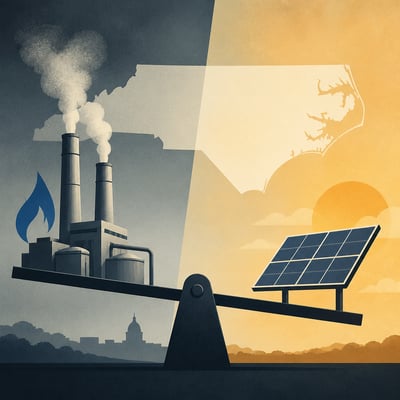
North Carolina is debating whether rising electricity demand should be met with new natural-gas and nuclear generation or with faster solar, battery storage, and efficiency measures.
Duke Energy’s proposed expansion has drawn regulatory scrutiny over demand forecasts, construction and fuel costs, emissions, and the risk of overbuilding, while lawmakers are considering measures affecting fossil-fuel permitting, data centers, coal retirement, and solar taxation. The outcome will shape ratepayer exposure, the pace of coal replacement, and the state’s ability to maintain its long-term emissions goals.
The story now frames Duke’s expansion debate more explicitly around ratepayer risk and overbuilding concerns, while the clean-energy response has sharpened into a stronger push for local solar, batteries, and efficiency as alternatives to both gas and new nuclear. The legislative side also became more concrete, with Senate Bill 730 and House Bill 1213 now tied to data centers, fossil-fuel permitting, coal retirements, and solar taxation.
The story now has sharper regulatory and legislative specifics: Duke’s gas plans face a formal delay recommendation, while two bills would reshape both data-center growth and solar taxation. The framing has also tightened around a policy choice between dispatchable fossil/nuclear capacity and faster clean-resource deployment.