
 AI Governance
 Data Centers
 Drones
 Climate
 Privacy
 2026 Maine Senate
 Bob Dylan
Nebraska Wildfires Disrupt Ranching
Coverage from WOWT, KOLN, and others
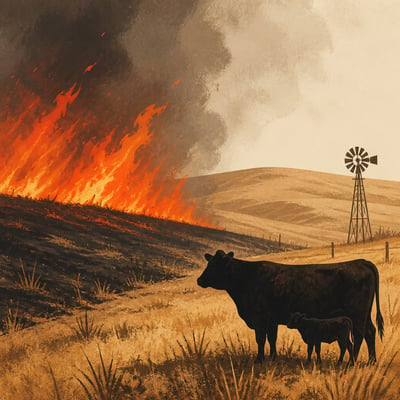
Large wildfires across central and western Nebraska have burned record areas, destroyed grazing land and hay, and disrupted cattle operations during calving season.
The damage is compounded by drought, warm and dry conditions, invasive vegetation, and limited pasture availability, raising costs and in some cases threatening herd sizes and ranch viability. The fires have also renewed debate over prescribed burning, fire-resilient infrastructure, and how Nebraska can reduce fuel loads without increasing the risk of escaped burns.
The story now emphasizes that the wildfire damage is not just large but is directly threatening ranch viability through higher costs, possible herd reductions, and longer recovery. It also adds a stronger policy angle: prescribed burning remains controversial, but regulatory pauses and opposition have become more prominent.
The story has become more concrete and severe: Nebraska’s wildfire crisis is now framed as a record-setting 2026 outbreak that has already burned unprecedented acreage and caused large-scale ranching disruption. The debate over prescribed fire remains, but it is now set against clearer evidence of statewide damage, longer recovery, and limited fire-response capacity.