
 AI Governance
 Data Centers
 Drones
 Climate
 Privacy
 2026 Maine Senate
 Bob Dylan
Middle East Conflict Raises Climate Risks
Coverage from Peace News Network, Climatemint, and others
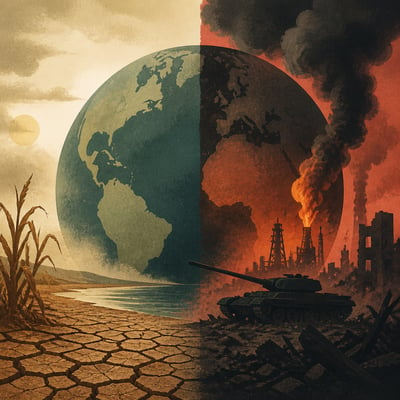
Conflict involving Iran and the wider Middle East is intensifying environmental and humanitarian risks in a region already facing severe heat, drought, and water stress.
Reported damage to desalination, power, oil, and chemical infrastructure threatens water supplies and public health, while military operations, fires, fuel disruption, and reconstruction add emissions and pollution. The broader evidence suggests that climate pressures can amplify existing political and economic tensions, but do not by themselves determine whether conflict occurs.
The story has sharpened from broad climate-conflict linkage into a more explicit account of infrastructure attacks and their immediate environmental and humanitarian fallout, especially around water and energy systems in Iran and the Gulf. It also adds a clearer interpretive frame: climate stress amplifies conflict risks, but does not by itself cause violence.
The story narrowed into a more specific geopolitical and regional frame: Iran and the wider Middle East now dominate the narrative, with direct attacks on desalination, power, and oil infrastructure layered onto drought and extreme heat. It also more explicitly treats war itself as a climate driver through emissions, damaged energy assets, and diverted adaptation resources.