
 AI Governance
 Data Centers
 Drones
 Climate
 Privacy
 2026 Maine Senate
 Bob Dylan
Maple Producers Adapt to Warmer Winters
Coverage from The Washington Post, BostonGlobe.com, and others
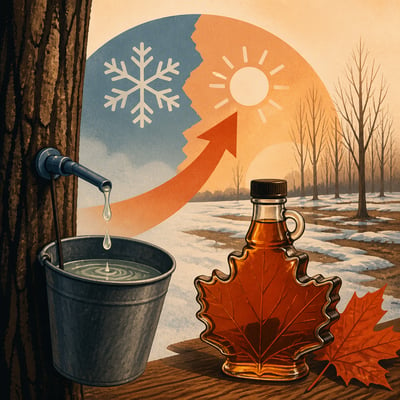
Warmer and less predictable winters are disrupting the freeze-thaw conditions that maple trees need for reliable sap flow across Virginia, New York and Vermont.
Producers face earlier or shorter seasons, storm damage and greater uncertainty, but modern tubing, vacuum and reverse osmosis systems are helping some operations maintain or increase output. The effects vary by region: some producers report severe losses, while Vermont’s industry remains economically strong as technology improves efficiency.
The story now emphasizes that climate pressures are not just disrupting maple production, but also accelerating structural strain on vulnerable producers, especially in Highland County. Vermont’s industry is framed more explicitly as resilient and economically strong because technology is boosting efficiency and output per tap.
The update broadens the story’s framing from a mainly production-and-adaptation issue to one with clearer community and economic stakes. It also sharpens the regional picture by adding Western New York and emphasizing specific 2026 weather impacts like ice damage and early warmth.
The update adds a sharper 2026 production picture: southern producers, especially in Highland County, Virginia, are seeing explicit yield losses, while Vermont is now described as holding up well through technology and adaptation. It also adds new adaptation tactics and a broader regional framing across the Northeast and Great Lakes.
The story now emphasizes that storm damage, not just warm winters, is materially worsening sap collection by damaging tubing and trees. It also adds crop diversification as a producer response, broadening the adaptation toolkit beyond extraction and processing equipment.
Maple syrup producers in Vermont, Virginia, and western New York are facing warmer, less reliable winters that disrupt sap flow, shorten seasons, and increase pressure to adopt tubing, vacuum, and reverse osmosis systems.