
 AI Governance
 Data Centers
 Drones
 Climate
 Privacy
 2026 Maine Senate
 Bob Dylan
Heavier Storms, Sharper Droughts
Coverage from Vermontbiz, Aol, and others
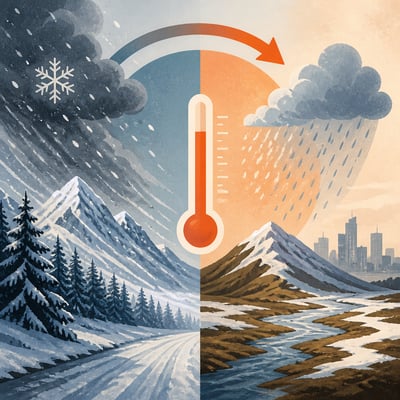
Climate change is altering when and how precipitation arrives, with more water falling in intense storms and longer dry periods between events.
This can increase flooding and runoff while reducing soil moisture, groundwater recharge, snowpack, and dependable water supplies, allowing severe drought and heavy rainfall to occur in the same regions. The pattern is prompting reassessment of water management, infrastructure standards, forecasting, and emergency planning.
The story broadens from a general warning about precipitation changing to a more specific framing of hydrological volatility, adding new geographic emphasis on the Amazon and explicitly identifying updated forecasting and emergency-management needs. It also introduces new actors and institutions, including the University of Gothenburg and the National Weather Service, while sharpening the link between precipitation timing, evaporation, and water shortages.
The framing has broadened from general shifts in storm timing and flood/drought risk to a more specific claim that precipitation patterns are undermining reliability of water systems, infrastructure standards, and emergency planning based on historical norms. The regional focus also now emphasizes the northeastern and eastern U.S. alongside high-latitude storm changes.