
 AI Governance
 Data Centers
 Drones
 Climate
 Privacy
 2026 Maine Senate
 Bob Dylan
Livestock Pressures Land and Grasslands
Coverage from Inside Climate News, Earth.Org, and others
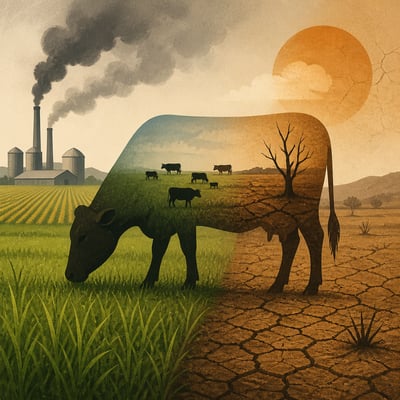
Global livestock production is expanding its demands on land, water, and feed while contributing to greenhouse-gas emissions, biodiversity loss, and nutrient pollution.
Research also indicates that climate change could substantially reduce the areas suitable for grazing by 2100, with especially serious implications for African grasslands and communities dependent on livestock. Together, these trends point to a tightening relationship between livestock production, ecosystem protection, climate resilience, and food security.
The story broadens from livestock’s land and emissions pressures to a wider systems framing that also includes nutrient pollution, marine ecosystem impacts, trade, food demand, and biofuel policy. The grazing-suitability finding is also sharpened with scenario-specific losses for African grasslands.
The story now adds sharper quantification and attribution: livestock is framed as the dominant driver of non-forest ecosystem conversion, and the climate risk to grazing land is more precisely modeled. It also introduces a new financing angle, with publicly funded development banks singled out for continued support of intensive livestock operations.