
 AI Governance
 Data Centers
 Drones
 Climate
 Privacy
 2026 Maine Senate
 Bob Dylan
Climate Change Shrinks Plant Habitats
Coverage from E&E News by POLITICO, UC Berkeley Rausser College of Natural Resources, and others
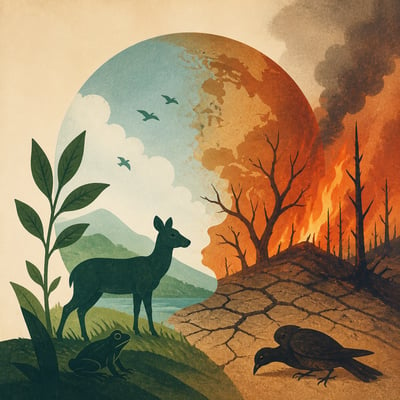
Climate change is projected to sharply reduce suitable habitat for a significant share of plant species by the end of the century, with the greatest risks concentrated in regions such as southern Europe, the western United States, southern Australia, the Arctic and Mediterranean-climate areas.
Multiple studies indicate that even unrestricted dispersal would not prevent many losses because climate-suitable habitat itself is expected to contract, while warming-related wildfire changes add pressure on biodiversity. Conservation responses are therefore likely to require habitat protection and restoration, climate refugia, seed banks and carefully managed assisted migration rather than relocation alone.
The story now puts more emphasis on plant-specific habitat collapse and the limits of assisted migration, while adding that climate-driven community reshuffling may alter ecosystem function even where local diversity rises. It also narrows the geographic emphasis and introduces new institutional actors behind the research.
The story has broadened from climate-driven species loss to a more integrated habitat-risk framework that now explicitly includes rainfall shifts, land-use barriers, wildfire, and conservation responses. It also adds stronger quantitative plant-loss projections and a new wildfire threat layer, making the conservation implications more immediate and geographically specific.