Heat Drives Inactivity and DeathsHeat Drives Inactivity and DeathsCoverage from Penn State News, News-Medical, and others
00/00/0000
DailyWeekly
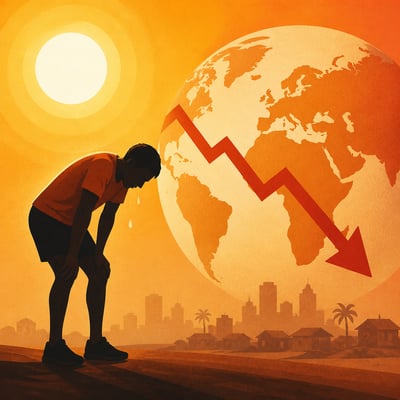
Rising temperatures are projected to reduce physical activity and increase heat-related illness and deaths, with the largest effects in hotter, lower-income regions.
A Lancet Global Health modeling study covering 156 countries estimates that each additional month above 27.8°C could raise global physical inactivity by roughly 1.5 percentage points and contribute to hundreds of thousands of premature deaths annually by 2050. Other evidence highlights Europe’s preparedness gaps, limited cooling access, and the disproportionate mortality burden facing countries with fewer adaptation resources.
Looking Back
1027 Day Timeline
Articles published over time. Hover any bar for the period and its article count.
Oct '23
Mar '24
Sep '24
Feb '25
Aug '25
Jan '26
Jul '26
History
08/04/2026
The story now puts more weight on quantified future mortality from heat, adding a specific global estimate and emphasizing scenario dependence. It also shifts the geographic emphasis toward Europe’s preparedness gaps alongside the broader inequality in adaptation capacity.
08/02/2026
The story has shifted from broad evidence that heat constrains health and activity to a more detailed picture of structural adaptation gaps and policy response. The new version adds concrete U.S. county-level risk projections, WHO year-round planning guidance, and stronger emphasis on unequal cooling, housing, and healthcare capacity as the main determinant of outcomes.

 AI Governance
 Data Centers
 Drones
 Climate
 Privacy
 2026 Maine Senate
 Bob Dylan