Europe’s Record Heat Tests PreparednessEurope’s Record Heat Tests PreparednessCoverage from Carbon Brief, Duluth News Tribune, and others
00/00/0000
DailyWeekly
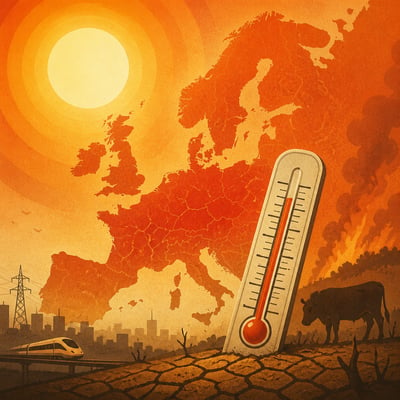
A record heat wave spread across Western, Central, and Southern Europe in 2026, breaking national temperature records and producing dangerous daytime and nighttime conditions.
Attribution studies found that human-caused climate change substantially increased the likelihood and severity of the event, while reporting documented deaths, hospital pressure, transport damage, power disruptions, school closures, and rising wildfire risk. The episode is also driving attention toward longer-term adaptation, including heat-health planning, fire preparedness, and funding for resilience.
It adds distinct evidence that heat-driven evaporation sharply increased drought risk and heightened wildfire and water stress across Europe.
Reuters
Key Issues
01
Climate change is amplifying extreme heat
Attribution studies consistently find that human-caused warming made the 2026 European heat exceptional, increasing both daytime and nighttime intensity and making comparable events far more likely. Heat-stress records were reached or approached across a large share of European cities.
Drawn from 5 articles
02
Heat is producing a large and incompletely measured health burden
Back-to-back heatwaves have produced thousands of estimated excess deaths across Europe, with particularly large burdens reported in France, the United Kingdom, Belgium, and Germany. Estimates vary by method and remain incomplete, while hot nights and surging emergency demand add risks beyond recorded mortality.
Drawn from 5 articles
03
Heat is compounding drought, wildfire, and service risk
Extreme heat is accelerating atmospheric and soil drying across Europe, increasing wildfire readiness and water stress even where rainfall deficits are not the primary driver. These conditions are cascading into fires, transport and public-service disruption, energy pressure, and broader infrastructure exposure.
Drawn from 5 articles
Looking Back
113 Day Timeline
Articles published over time. Hover any bar for the period and its article count.
May 14
Jun 1
Jun 19
Jul 10
Jul 28
Aug 15
Sep 2
The Story So Far
No material change
The supplied articles do not establish a material change beyond the previously documented mortality burden and heat-related risks.
Previously
A severe heat wave spread across Western, Central, and Eastern Europe, producing record temperatures, dangerous overnight heat, deaths, hospital pressure, transport failures, school closures, wildfires, and energy disruptions. Attribution studies reported that human-caused climate change substantially increased the event’s likelihood and intensity, while European agencies warned that the region is warming faster than the global average. The wider evidence also points to longer hot seasons and increasingly exposed marine and terrestrial ecosystems.
History
09/05/2026
The story shifts from documenting heat-wave impacts toward emphasizing adaptation, preparedness, and resilience funding. France’s hottest recorded summer provides a more specific national benchmark, but the core climate attribution and disruption findings are confirmed.
08/24/2026
The story now links the heatwave to concrete water-and-energy constraints, including reduced nuclear generation, while expanding to exceptional warming in European seas.
World Weather Attribution linked a late-June European record heatwave to human-caused climate change, reporting strong increases in likelihood and health impacts.
Climate Central and Minnesota climatology experts attributed a Minnesota Northland heat wave to human-caused warming, linking higher extreme-temperature frequency to health risks.
Western Europe officials and scientists reported an omega block stationary pattern driving a late June heatwave, with human caused climate change increasing extreme nighttime heat risk.
Researchers from Europe and the United States found in 2026 that human-caused warming intensified extreme sea-surface temperatures and marine heatwaves across European coastal regions.
Scientists using World Weather Attribution found human-caused warming made Europe drought conditions more likely after a June heatwave across France to Romania.
Researchers estimate about 2,700 heat-related deaths in England and Wales in May and June 2026, with about 42% attributable to human-caused warming, based on rapid attribution modeling.
World Weather Attribution linked an early-June European heat dome to climate change, estimating major increases in heat stress likelihood across dozens of countries.
World Weather Attribution quantified climate change attribution for a June 18 Europe heat wave, estimating record heat stress for 45% of analyzed cities across 30 countries.
Scientists link a record-breaking June heat wave across France, the UK, Spain, and other European countries to human-caused warming, raising heat-wave frequency and health risk.
France and the United Kingdom reported record-breaking summer heat during a second Western European heat wave as scientists analyzed attribution and simulated upper limits.
France and western Europe experienced an unprecedented heatwave in spring, where human-caused climate warming amplified heat-dome temperature records and near-term health and infrastructure risks.
In Europe during May and June 2026 heatwaves, excess-death and temperature-mortality models produced varying heat-attributed death counts across France, Germany, the Netherlands, and the UK.
World Weather Attribution climate scientists reported climate change increased European drought severity in 2024 through extreme heat and evaporation, affecting Romania, Greece, France, and the Netherlands.
Copernicus Climate Change Service reported in 2026 that Western Europe experienced record June-July heat, intensified drought, major wildfires, low river levels, and exceptional sea surface temperatures.
Copernicus Climate Change Service reported in July 2026 that record marine heat and persistent heatwaves were intensifying drought, wildfires, water shortages, and economic damage across Europe.
The Copernicus Climate Change Service reported in July that global ocean temperatures reached their highest recorded level for the month, with records also set across Europe.
8/10/2026 • Climate Science & Impacts • General
PreventionWeb / Marco Zanchi, Emma Holmberg, Carmen Álvarez-Castro et al.74
ClimaMeter reported in 2026 that anthropogenic warming intensified a June Western European heatwave by up to 2.5°C relative to 1950-1987 conditions, exposing 327 million people and $15.6 trillion in economic activity.
Copernicus Climate Change Service reported a record-hottest June for Western Europe in 2020s-era observations, tied to heatwave impacts and record ocean sea-surface temperatures.
European weather agencies report record extreme heat driven by a heat dome during June, while scientists attribute higher heat dome frequency and wildfire risk to climate change.
Copernicus reported May at 1.42C above pre-industrial levels amid Western Europe heatwave attribution and El Niño-driven ocean warming, while UN and WMO warned of heightened risk.
The UK Met Office and Meteo-France reported record May temperatures in London and Paris during a heat dome, citing human-caused climate change as a key driver.
World Weather Attribution researchers found in July 2026 that human-caused warming drove unprecedented marine heat across the Celtic Sea, Iberian waters, and Mediterranean.
World Weather Attribution scientists found that human-caused warming intensified summer marine heatwaves across the Mediterranean and western European seas, causing ecological risks.
World Weather Attribution researchers said Wednesday that climate change caused record marine heat waves across the Mediterranean, Atlantic waters, and seas near Ireland and Britain.
World Weather Attribution scientists said on August 19 in Brussels that human-caused warming drove record sea temperatures across European waters, threatening marine ecosystems and coastal communities.
Imperial College London, the Met Office, and LSHTM estimated over 2,700 heatwave heat-related deaths in England and Wales in May-June, with human-caused climate change contributing more than 40 percent.
University of British Columbia researchers report longer, more abrupt summers since 1990 across mid-latitudes, increasing wildfire and cooling-demand risks.
World Weather Attribution and researchers linked a week of heat domes in Europe and the eastern United States to fossil-fuel-driven warming, increasing severity and mortality risk.
Copernicus data and attribution findings linked June and July 2026 heatwaves in western Europe to climate change, with record temperatures, health impacts, and higher wildfire risk.
Imperial College London, Met Office, and London School of Hygiene and Tropical Medicine estimated at least 2,700 excess deaths in England and Wales from May and June heatwaves, with climate change contributing extra heat.
Imperial College London, Met Office, and London School of Hygiene and Tropical Medicine estimated at least 2,700 heatwave deaths in England and Wales after May and June heat events.
EuroMOMO reported 10,650 excess deaths during a late-June Europe heatwave, while attribution findings linked increased heat to human-caused climate change.
Imperial College London, the Met Office, and LSHTM attributed May and June UK heatwaves to over 2,700 deaths across England and Wales, with climate change increasing heat intensity.
Heat waves linked to thousands of excess deaths are increasing wildfire risk across Europe, with human-induced climate change estimated to drive part of UK mortality.
EuroMOMO data reported over 10,000 excess deaths during a late-June west Europe heatwave, with attribution analyses estimating a substantial portion tied to human-caused warming.
Copernicus reported record heat in Western Europe in late June and linked stronger heatwaves to human-caused climate change, raising wildfire and health risks.
World Weather Attribution scientists reported human-driven warming behind a record June heatwave across Europe, increasing heat stress and productivity and food-price risks in the 2020s.
World Weather Attribution researchers reported in 2020s summer that climate change increased likelihood of Europes record heat wave, intensifying health and infrastructure risks.
In Europe during 2020s summer conditions, a record heat wave led to hospital and emergency overload while scientists attributed the extreme temperatures to human-caused climate change.
Multiple European countries issue red heat alerts in June as a stationary heat dome, amplified by climate change, drives extreme temperatures, health risk, and infrastructure strain.
Friederike Otto and Copernicus/ECMWF assessments link Europe record May heat to human-caused warming and warn of elevated summer 2026 health and drought risks.
World Weather Attribution links fossil fuel emissions to worsened European heat waves as European countries and U.S. regions report excess heat and fire-weather impacts in mid-2026.
European health agencies and researchers reported that four consecutive summer heatwaves caused more than 35,000 estimated excess deaths across Europe, with final totals pending.
Scientists report increasingly severe wildfires across Europe and North America as climate warming dries landscapes, while Copernicus records declining global fire emissions driven by changing land use.
Copernicus and EuroMOMO reported record June heat-wave excess deaths across Western Europe, including more than 10,000 deaths and climate-attributed mortality in England and Wales.
Copernicus observations show western Europe recorded its hottest June ever, with attribution to climate change tied to major health and wildfire risks across Europe.
Heatwaves in Europe during 2022 have intensified as warming increases nighttime heat stress, raising health impacts and deaths across multiple countries.
Germany and Italy faced record-setting heatwave impacts in late June as scientists attributed increased nighttime heat likelihood to human-caused climate change.
A Europe-wide heat wave in 2025 set record temperatures across Denmark, Switzerland, Germany, and France, and scientists linked extreme heat and humidity to human-driven climate change.
WWA researchers linked a record Western Europe heatwave to climate change, using observed and forecast data to show humidity and warming increased health risks.
The EU Copernicus Climate Change Service reported record June-July heat, drought and wildfire danger across Western Europe, while July global sea-surface temperatures also reached a record.
Friederike Otto and ClimaMeter reported that climate change likely exacerbated a Western Europe record May heatwave affecting London, France, and Spain.
The World Meteorological Organization warns in its five-year outlook that rising global temperatures and extreme heat will increasingly affect every continent through the late 2020s.
Western Europe faced a record late-May heatwave driven by a heat dome, producing deaths, wildfire risk, and infrastructure disruption as experts cited climate change attribution.
Carbon Brief DeBriefed linked a record-breaking Europe heatwave to fossil-fuel-driven climate change and highlighted methane and electrification policy actions alongside Project Cosmos.
June 28 reporting across Europe describes a record heatwave beginning June 20 with near-40 C forecasts, excess deaths in France, disrupted power and water systems, and attribution to human-caused climate change.
World Weather Attribution linked a late-June Europe heatwave to human-caused climate change as France and Belgium livestock farms reported mass animal losses and productivity declines in June.
The World Health Organization reported 1,300 excess deaths as a June 20 Europe heatwave persists across Italy and the Balkans, with scientists attributing extreme nighttime temperatures to human-caused climate change.
Scientists linked a Europe heat wave to human-caused warming as Poland, the Czech Republic, Germany, Denmark, and Britain reported record temperatures and public health impacts.
Western Europe experienced a record June heatwave in late June 2026, producing deaths and transport disruptions across Germany, the UK, France, Italy, Denmark, and the Czech Republic.
The World Meteorological Organization reported late June record-breaking Europe heat, citing high-pressure blocking and describing health, agriculture, and wildfire-related risks.
AFP reports Europe-wide heatwave forecasts on Thursday, with 101 million people expected above 35C and multiple countries issuing major public health alerts.
National weather services across Europe issued heat warnings as Britain, France, Spain, and Germany faced record-breaking temperatures in late June 2025.
Météo-France and European authorities reported record heat wave conditions during 2020s summer weeks, citing climate change while describing grid outages and nuclear cooling disruptions in France.
Europe and parts of Asia issued heat warnings as France reported its hottest day since 1947, with climate change linked to worsening extreme-heat impacts.
Climate Central reported human-caused climate change is increasing dangerous humid heat days in global cities, with wet-bulb temperatures defining hazardous conditions.
In the UK, France, and parts of Europe, a late-spring heat dome caused record high temperatures, with UK and European agencies attributing increased risk to human-caused climate change.
UK Met Office and French meteorological services reported late-May record heat over western Europe, with climate-change attribution and seven heat-attributed deaths in France.
EuroMOMO reported 10,650 excess deaths in western Europe during late June, with climate change cited as a key driver of extreme heat and related health impacts.
The Office for National Statistics reported that hot-weather deaths increased in England and Wales from 1988 to 2025, narrowing the mortality gap with cold weather amid warmer UK summers.
Western Europe wildfires displace tens of thousands in France and Spain in July, as climate scientists attribute worsening fire-weather conditions to climate change.
Thousands were evacuated in southern Europe as climate-driven heat waves preceded wildfires in France, Spain, Portugal, and Greece, increasing health risks and firefighting deployments.
Public Health France reported at least 1,000 additional deaths during a record heat wave as attribution analysis linked the European event to climate change.
France, the UK, and Spain issued red heat warnings as early-summer extreme temperatures and heat-related risks increased across Europe in the past week.
Scientists linked record European June heat and wildfire growth to fossil-fuel-driven climate change, while EU funding and firefighting actions responded to France and Spain fire damage.
A U.K. government-backed Climate Change Committee report released in May 2026 coincided with record heat, warning that more than 90% of homes could overheat by 2050.
France recorded its hottest summer since 1900 after severe heatwaves caused 2,025 excess deaths, drought, and wildfires across the country and intensified risks across Europe.
The European Mortality Monitoring Network reported approximately 16,000 excess deaths during a June heat wave across Europe, with the sharpest increase in northern countries.
Europe experienced a fifth intense summer heat wave as drought, wildfires and infrastructure failures affected countries including Britain, Germany, France, Greece and Spain.
During summer 2020s heat waves, extreme temperatures across France, the UK, and Germany increased heat-related health impacts and contributed to wildfire emergencies.
A July 9, 2026 report estimated nearly 298 million people across the European Union faced excessive ground-level ozone exposure during late-June's record heat wave.
Scientists linked an early-July European heatwave to fossil-fuel-driven climate change, followed by wildfires in Greece, Spain, Portugal, and France with evacuations and high fire-risk levels.
Scientists and WHO officials reported record European heat beginning 20 June, with human-caused climate change increasing likelihood of extreme nighttime temperatures.
Tedros Adhanom Ghebreyesus said Europe excess deaths from a heat wave follow climate change, as Germany and the Czech Republic recorded record temperatures and attribution found a large increase in likelihood.
World Meteorological Organization confirmed in March 2025 that 2024 was the hottest year as heat waves grow hotter, more frequent, and longer-lasting, with Europe warming fastest.
World Meteorological Organization findings in March 2025 state 2024 was the hottest year, exceeding 1.5 C above preindustrial, as heat waves intensify worldwide.
A heat dome in Western Europe in 2020s conditions pushed temperatures above 40C in parts of the UK, France, Spain, and Italy, driving red alerts over health, wildfire, and disruption risks.
UN climate chief Simon Stiell warned that a record heat wave in Western Europe reflects human-caused climate change as France, Germany, Portugal, England, and Ireland issue heat guidance.
Italian health authorities placed 27 cities on red alert during renewed 2026 heat, as European officials reported mortality, wildfire, and agricultural risks across the region.
During June 2024 heatwaves, western Europe and the UK saw near-ground ozone spikes linked to harmful health and ecosystem effects, with concentrations peaking across Germany, Benelux, and Italy's Po valley.
Wildfires across southern Europe and the eastern Mediterranean have caused major deaths, and climate change is expected to increase heat and dryness that intensify burning and elevate mortality risk.
World Weather Attribution linked a Europe heat wave to climate change, while Germany, France, the UK, and Italy reported transport disruption, evacuations, and hospital overload.
Maynooth University climate director Peter Thorne said Europe’s heatwave has a climate change component, elevating nighttime health risks for medically vulnerable people.
France and the UK issued red heat alerts during a Western Europe heat wave as deaths and temperature records underscored vulnerability from limited air conditioning access.
Spain and France reported very high wildfire danger and heatwave impacts as active blazes burned across multiple regions, with climate change cited as intensifying wildfire risk.
EU environment ministers met in Luxembourg on June 25 to plan for the UN climate summit in Antalya while debating rollbacks to CO2 standards and carbon pricing amid extreme heat.
6/25/2026 • Policy, Politics & Governance • General
In late June, a heatwave breaking temperature records across Germany, Poland, Czechia, Slovakia, Denmark, France, Spain, Belgium, and Hungary increased health and infrastructure impacts.
Météo-France and Spanish authorities reported severe health impacts from a Europe heatwave with record temperatures across France and neighboring countries in 2026.
Paul Krugman argues that extreme heat in the northeastern U.S. and Europe is driving health and economic harms, amplified by weakening of resilience policies.
7/9/2026 • Policy, Politics & Governance • General
A commentary in Newsweek disputed claims that climate change is directly worsening heat domes, arguing Europe faces higher heat mortality due to cooling and preparedness policy choices.
6/30/2026 • Policy, Politics & Governance • General
Researchers and UK and France officials describe a record-breaking European heatwave as climate-amplified, with hospital failures and nuclear cooling impacts reported.
6/26/2026 • Policy, Politics & Governance • General

 AI Governance
 Data Centers
 Drones
 Climate
 Privacy
 2026 Maine Senate
 Bob Dylan