
 AI Governance
 Data Centers
 Drones
 Climate
 Privacy
 2026 Maine Senate
 Bob Dylan
Climate Change Shifts Malaria Risk
Coverage from Nature, Met Office, and others
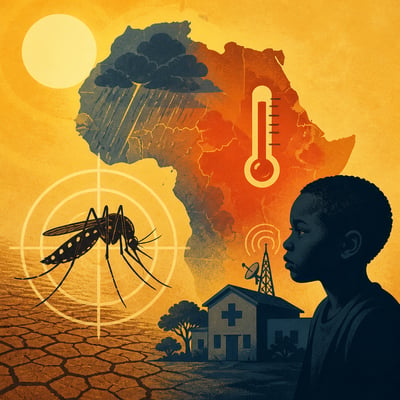
Research indicates that climate change is shifting malaria risk across sub-Saharan Africa rather than producing a uniform increase.
Warming may reduce transmission in some already-hot parts of West Africa while increasing suitability in cooler highland and southern regions, and floods and other extreme events can disrupt bed-net distribution, surveillance, diagnosis, treatment, housing, and health services. The findings highlight the importance of locally targeted malaria control, climate-resilient health infrastructure, early-warning systems, and broader emissions reductions.
The story now adds a quantified, model-dependent estimate of potentially severe malaria impacts from extreme-weather disruption and emphasizes emissions reductions alongside localized adaptation. Historical attribution evidence also sharpens the conclusion that climate change has a modest average effect but substantial regional redistribution.
The story is reframed more narrowly around malaria in sub-Saharan Africa, with stronger emphasis on localized climate effects and operational disruptions rather than broader infectious-disease impacts. It also adds new evidence that health-system capacity and nonclimate factors may shape malaria burden as much as climate change itself.