
 AI Governance
 Data Centers
 Drones
 Climate
 Privacy
 2026 Maine Senate
 Bob Dylan
Climate Change Raises Bear Conflicts
Coverage from Forbes, Louisville Public Media, and others
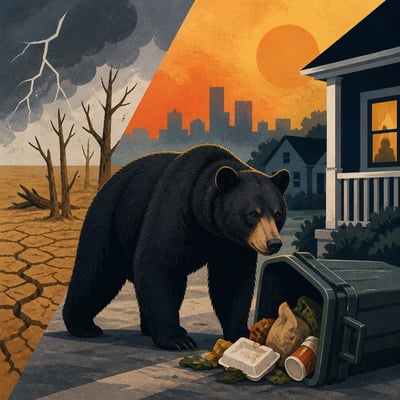
Climate change is contributing to more frequent bear encounters by intensifying drought, disrupting forests, reducing wild food supplies, and lengthening the period when bears are active.
Urban growth, recreation, and unsecured food sources add to the overlap between people and bears, particularly in Tennessee, Georgia, and other bear habitats. Communities are responding with bear-resistant waste systems, education, feeding restrictions, and agency intervention, but repeated incursions can lead to relocation or lethal management.
The story now places stronger emphasis on broader geographic spread and on what happens after repeated bear incursions: agencies may relocate bears, but habituated animals can also be euthanized. It also adds that poor wild-food years can materially increase conflict and bear deaths in some regions.
The story now frames bear conflict as broader across the U.S. and more tied to changing spring timing, while adding specific attractants like cars and homes. It also sharpens the response side, emphasizing agency guidance, feeding bans, and potential euthanasia when prevention fails.