
 AI Governance
 Data Centers
 Drones
 Climate
 Privacy
 2026 Maine Senate
 Bob Dylan
Climate Change Raises Bear Conflicts
Coverage from Forbes, Louisville Public Media, and others
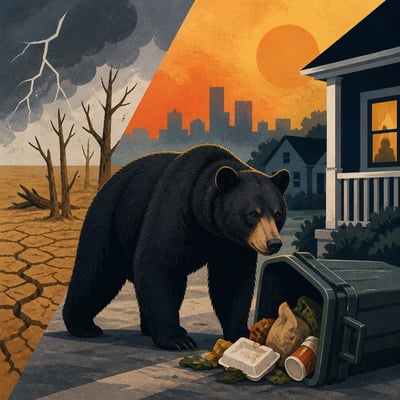
Climate change is contributing to more frequent bear encounters by intensifying drought, disrupting forests, reducing wild food supplies, and lengthening the period when bears are active.
Urban growth, recreation, and unsecured food sources add to the overlap between people and bears, particularly in Tennessee, Georgia, and other bear habitats. Communities are responding with bear-resistant waste systems, education, feeding restrictions, and agency intervention, but repeated incursions can lead to relocation or lethal management.
The story now places stronger emphasis on broader geographic spread and on what happens after repeated bear incursions: agencies may relocate bears, but habituated animals can also be euthanized. It also adds that poor wild-food years can materially increase conflict and bear deaths in some regions.
The story now frames bear conflict as broader across the U.S. and more tied to changing spring timing, while adding specific attractants like cars and homes. It also sharpens the response side, emphasizing agency guidance, feeding bans, and potential euthanasia when prevention fails.
The story broadens beyond Tennessee and Georgia into a wider North American pattern, adding the mountain West, Northeast, and Canadian provinces as areas where climate stress is increasing bear-human conflict. It also sharpens the mechanisms involved, emphasizing earlier emergence, longer seasonal activity, and more frequent management actions such as relocation or lethal control.
- Bear conflicts are now described across the mountain West, Northeast, and parts of Canada.
- Warmer conditions may make bears emerge earlier and stay active longer.
- Poor berry, nut, or salmon availability is linked to more conflicts.
- Wildlife managers may relocate bears instead of only trapping or euthanizing them.
- The narrative now includes a broader climate-driven pattern beyond Tennessee and Georgia.
Black bear encounters are rising in parts of Tennessee and nearby Georgia as drought, storm damage, and habitat change reduce natural food supplies and push bears toward trash, cars, homes, and other human food sources. Wildlife officials and researchers frame the pattern as one example of climate-driven human-wildlife conflict, with urban growth and familiar food attractants adding pressure. Local responses focus on prevention through bear-proof dumpsters, public education, and rules against feeding bears, while repeated home incursions can still lead to trapping or euthanasia for safety reasons.