
 AI Governance
 Data Centers
 Drones
 Climate
 Privacy
 Bob Dylan

2026 Maine Senate: Featured Story
Coverage from The Hill, The Epoch Times, and others
Women Shape Maine’s Senate Race
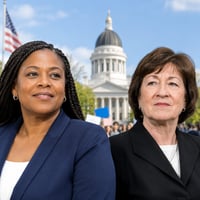
Democrat Troy Jackson leads Republican incumbent Susan Collins 49% to 45% in a CNN/SSRS poll, a margin within the survey’s 4.5-point error range. The reports emphasize women voters and concerns including abortion rights, affordability and equity, while Collins highlights her independence from President Donald Trump. Decision Desk HQ characterizes the contest as a toss-up; a separate poll story also finds the Kansas Senate race close.
If you read one thing
Centers women voters’ concerns about abortion rights, affordability, equity and family support in the Maine race.
The evidence
Provides the CNN/SSRS poll details and explains why the four-point lead still leaves the contest a toss-up.
Best explainer
Adds context on Collins’s electoral resilience and the candidates’ contrasting arguments about costs, policy and independence.
The available polling shows Jackson narrowly ahead, not a settled outcome: the reported lead is within the survey’s stated error range, and election coverage characterizes the race as a toss-up. Collins’s record of winning despite unfavorable polling is part of the uncertainty.
CNN/SSRS reported Jackson leading Collins 49% to 45% among likely voters, a four-point margin within the poll’s 4.5-point margin of error. The report says Jackson’s lead was three points in the pollster’s August survey.
Decision Desk HQ described the contest as a toss-up; its reported estimate gave Jackson a 57% chance of winning in some coverage. This is a forecast, not an election result.
Jackson became the Democratic nominee after Graham Platner withdrew amid allegations, which Platner denied; party delegates selected Jackson. Collins is seeking another term and has emphasized her bipartisan record and independence, while Jackson argues she has aligned with Trump.
Voters interviewed for coverage raised abortion rights, household costs, food insecurity and equity. The reporting presents these as concerns among the people interviewed, not as a measure of all Maine voters’ priorities.
49% to 45%
CNN/SSRS poll of likely Maine voters found Troy Jackson leading Susan Collins by four percentage points; the result was within the poll’s 4.5-point margin of error.
783 likely Maine voters
CNN/SSRS sample size for the poll conducted October 20–27.
3 percentage points
Jackson’s lead in CNN’s August poll, compared with a four-point lead in the later survey.
46%; 52% of independents; 59% of Democrats
In an October 27 Marist poll, these shares of likely Maine voters said their personal family finances had worsened; subgroup figures were higher among independents and Democrats.
Contested Issue
Whether Susan Collins is independent of President Donald Trump
Collins has presented herself as independent and willing to break with Trump, and has promoted her bipartisan record.
Troy Jackson has challenged that portrayal, saying Collins backs Trump when he needs her and criticizing her vote for his legislation.
Whether a proposed federal subsidy for stay-at-home parents is a worthwhile use of public funds
Voter Bella Sturtevant said the proposal seemed politically motivated and did not feel genuine.
Voter Beth Bradley said raising children at home can be good for children, but she was unsure about asking everyone to fund it and was not on board with the proposal.
Coverage first framed the contest through a CNN/SSRS poll showing Troy Jackson ahead of Susan Collins 49% to 45%, a lead within the poll’s 4.5-point margin of error, and described the race as a toss-up. Reporting also explored voter concerns that could shape the contest, including abortion rights, equity and household costs, alongside Collins’s effort to present herself as independent of Donald Trump and Jackson’s criticism of her record. Subsequent accounts placed the close race in the context of Graham Platner’s withdrawal and Jackson’s selection as nominee, Collins’s history of winning despite unfavorable polling, and her emphasis on bipartisan work and federal funding for Maine. Election-day coverage continued to portray the outcome as uncertain, noting Jackson’s lead in polling averages while recalling Collins’s past overperformance.
Articles in this story are part of a shaping these topics.