
 AI Governance
 Data Centers
 Drones
 Climate
 Privacy
 2026 Maine Senate
 Bob Dylan

Bob Dylan’s Songs Resist Fixed Meaning
Coverage from The International Review of Music, SaportaReport, and others
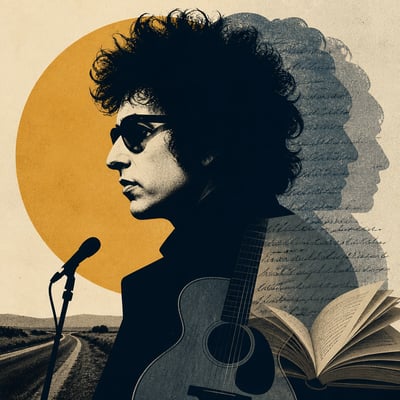
The topic centers on Bob Dylan’s songs as changing works shaped by folk and blues traditions, literary and spiritual influences, unconventional recordings, and shifting live performances.
Across discussions of albums such as Self Portrait, Highway 61 Revisited, Blood on the Tracks, and Rough and Rowdy Ways, writers examine how Dylan resists fixed interpretations while repeatedly revisiting questions of authorship, identity, privacy, and artistic reputation. The material combines documented history with critical readings, so interpretations of Dylan’s intentions and symbolism remain unevenly supported.
The story is reframed more explicitly around Dylan’s songs as evolving through arrangements, performances, and changing contexts, rather than primarily as authored texts or literary artifacts. It also extends the discussion into late-period work, public-image management, and the archival history of folk transmission.
The framing broadens slightly from mostly songwriting and memoir criticism into a more explicit emphasis on Dylan’s books and their unstable mix of authorship, interpretation, and borrowing. The main interpretive shift is toward judging Dylan’s body of work through originality-versus-reuse and lyrical strength-versus-formal unevenness.
The framing shifts from a mainly interpretive retrospective on Dylan’s songs and memoirs to a broader historical account that more explicitly centers genre transition, authorship, and the limits of Dylan’s self-narration. The new version also adds more concrete attention to selection bias in The Philosophy of Modern Song and to Dylan’s move from folk toward electric rock.
The framing broadens from a focus on Dylan’s songs changing over time to a wider critical treatment of his books, performance practice, and use of American folk and popular traditions. The new version also adds stronger emphasis on memoir unreliability, source reshaping, and unresolved interpretive ambiguity in individual songs.
The framing has broadened from general reassessment of Dylan's catalog to a more specific emphasis on how meaning shifts through performance and on renewed attention to early electric breakthroughs like Highway 61 Revisited. The current version also introduces additional focal points, especially Dark Eyes, Ballad of a Thin Man, and named critics who anchor the interpretation.
This material tracks Dylan as a continually reinterpreted artist whose songs, personas, and books keep inviting debate about authorship, meaning, folk roots, and late-career reinvention. Recent pieces emphasize interpretive openness, shifting song meanings, and ongoing reassessment of Dylan's legacy rather than new tour or release news.