
 AI Governance
 Data Centers
 Drones
 Climate
 Privacy
 2026 Maine Senate
 Bob Dylan

Analysis of Dylan’s Dystopian Masterpiece
Coverage from HamptonThink.org, Psyche, and others
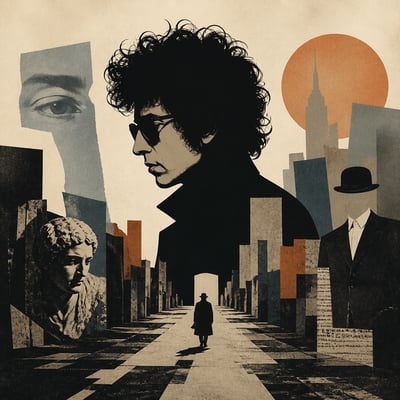
This topic centers on Bob Dylan's "Desolation Row" and the larger pattern of how Dylan is read as both a songwriter and a symbol.
The material repeatedly returns to his electric-era backlash, his refusal of fixed public roles, and the way later writers and musicians use him to think through authorship, persona, and loss. "Desolation Row" itself is treated as a densely layered lyric whose surreal imagery is often read as masking a more direct emotional or social core.
The story broadens from a Desolation Row-centered discussion into a wider survey of Dylan’s songwriting across folk, protest, spiritual, and later periods. Its framing also shifts toward competing interpretations of literary influence, political meaning, private experience, and artistic self-invention.
The framing shifts modestly toward Dylan’s formative influences and electric-era backlash, with Woody Guthrie and "Song to Woody" newly foregrounded alongside the existing persona analysis.