
 AI Governance
 Data Centers
 Drones
 Climate
 Privacy
 2026 Maine Senate
 Bob Dylan
Who Pays for Data Center Power?
Coverage from Fox News, Tribune Chronicle, and others
U.
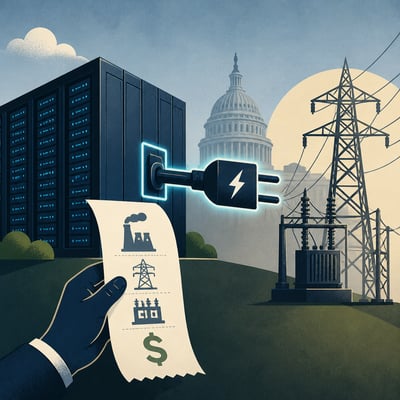
S. lawmakers are advancing legislation that would encourage states to make data centers and other electricity users with demand of roughly 100 megawatts or more pay for generation, transmission, interconnection, and related grid upgrades needed to serve them. The House passed the Ratepayer Protection Act 417-3, but the measure would direct states to consider such standards rather than impose them outright. The debate reflects a broader effort to accommodate AI-related data center growth without shifting project costs, stranded-investment risks, or resulting electricity pressures to households and small businesses.
The story is more clearly framed as an incentive for states to adopt large-load cost rules, rather than a federal mandate imposing uniform requirements. The policy debate is also tied more explicitly to managing AI-driven data center growth while limiting effects on households and small businesses.
The House measure has moved from pending consideration to a reported 417-3 passage, substantially advancing the ratepayer-protection effort. Senate action and enactment remain unresolved, while Senate sponsors and a 100-megawatt threshold sharpen the proposals’ scope.
The legislation has moved closer to a House vote without being enacted, while the story now places greater emphasis on growing state and local restrictions and parallel water and environmental issues.
U.S. lawmakers are advancing bipartisan proposals that would require large data centers, generally facilities using 100 megawatts or more, to pay for the generation, transmission, substations, and other grid upgrades needed to serve them. The measures also consider financial assurances to limit stranded costs if projects are delayed, reduced, or abandoned, while related legislation would examine peak-demand reductions and other ways to protect households. The proposals have gained support from some technology companies but face criticism that state implementation could remain voluntary and leave water, pollution, noise, and broader community impacts insufficiently addressed.