
 AI Governance
 Data Centers
 Drones
 Climate
 Privacy
 2026 Maine Senate
 Bob Dylan
New Jersey Makes Data Centers Pay
Coverage from The Jersey Vindicator, NJ.com, and others
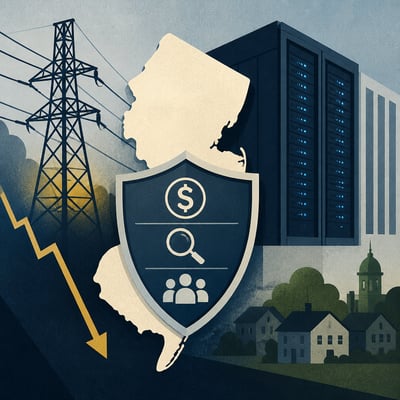
New Jersey is establishing a statewide framework for large data centers that shifts electricity and grid-upgrade costs to operators, requires recurring energy and water disclosures, and adds clean-energy and community-benefit obligations.
The measures respond to accelerating AI-related demand, concerns about utility bills and local environmental impacts, and growing municipal resistance to new facilities. The framework is intended to make data center growth more accountable while leaving individual siting and project disputes unresolved.
The story gains a concrete commercial dimension with a planned 300-megawatt AI facility in Vineland, identified with DataOne and Nebius, reinforcing the scale of projected demand.
The story has moved modestly toward implementation: New Jersey’s framework now has more specific reporting and municipal-support details, while its practical effects remain dependent on final regulatory and local arrangements.
New Jersey has crossed from policy design into implementation, with enacted large-load rules moving toward regulatory enforcement and reporting standards. The issue has also broadened regionally as Delaware advances comparable restrictions and New York considers a dedicated large-computing rate class.
- New Jersey’s large-load framework is enacted and moving into regulatory implementation.
- Implementation timelines range from 180 days to one year.
- Evidence through 2024 does not show robust local residential electricity-bill increases.
- Delaware has advanced renewable-sourcing, tariff, blackout-curtailment, and tax-credit restrictions.
- New York is considering a separate service class for computing loads of 20 megawatts or more.
The story has shifted from broad policy debate to a more concrete regulatory framework with specific tariff mechanics and tighter implementation signals. The current version adds clearer details on interconnection priority, take-or-pay commitments, and unresolved state and municipal actions that could determine whether projects move forward.
The story has moved from a general push for data-center accountability to a more concrete statewide framework, with signed legislation and a clearer implementation path. It also now highlights specific projects—especially Vineland’s DataOne facility—as focal points of public concern.
- Data Center Fair Share Act is now described as signed.
- Vineland’s DataOne facility is now a focal point of concern.
- Projects in Gloucester County and the Philadelphia region are newly highlighted.
- State measures may begin delivering household benefits in mid-2028.
- Implementation depends on Board of Public Utilities rules and utility proposals.
The story has shifted from proposed guardrails and pushback toward an actual regulatory push: New Jersey lawmakers have now passed a tariff framework for large data centers, while implementation details still need to be settled. The current framing also broadens the policy debate to include explicit ratepayer, water, and land-use concerns alongside grid and clean-energy costs.
- Lawmakers passed a tariff framework for large data centers.
- Implementation details and some legislation remain unsettled.
- Local resistance has led to municipal restrictions.
- A Kenilworth planning meeting was canceled.
- Water and land-use impacts are now more prominent concerns.
The story has shifted from a general guardrails proposal to a more concrete statewide regulatory package with specific tariff mechanics, grid-cost rules, and implementation timelines. It also now includes organized opposition pressing for a moratorium, showing the dispute has become more immediate and contested.
- More than 60 groups are urging a moratorium on new 20-megawatt data centers.
- The Data Center Fair Share Act links interconnection priority to home energy upgrades.
- BPU would set tariffs for data centers of at least 50 megawatts.
- Tariffs include emergency curtailment and 10-year take-or-pay service guarantees.
- Some rules and household benefits are scheduled for 2027–2028.
The story has shifted from a general push for statewide data center guardrails to a more concrete proposal that explicitly assigns upgrade costs to developers and adds labor and community-benefit expectations. It now reads more like an emerging regulatory package than an open policy debate.
New Jersey is moving to regulate data center growth as state leaders, advocates, and local governments respond to rising electricity costs, grid strain, and community concerns. Governor Mikie Sherrill has proposed statewide guardrails centered on cost responsibility, transparency, and local benefits, while lawmakers continue to refine reporting and tariff rules. The debate matters because it will shape who pays for large new power loads and how much public visibility communities get into their impacts.