
 AI Governance
 Data Centers
 Drones
 Climate
 Privacy
 2026 Maine Senate
 Bob Dylan
Duke Builds Durham Research Data Center
Coverage from Inside Climate News, WUNC News, and others
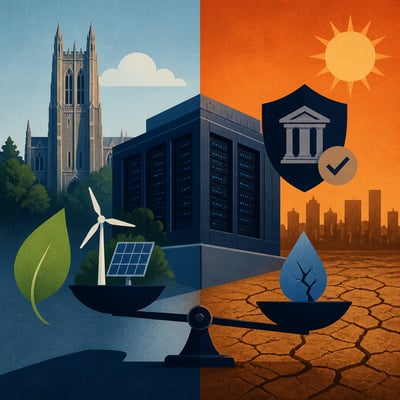
Duke University has begun building a $23 million, 1.
5-megawatt graphics processing unit data center on its Central Campus in Durham, North Carolina. The facility is intended to support research and artificial intelligence work, could expand to 3 megawatts or more, and is expected to increase Duke’s peak energy use by 2% to 3%. The project is moving ahead under a permit issued before Durham’s moratorium on new hyperscale data centers, while concerns remain about water use, drought conditions, emissions, and limited community input.
The story is now framed more explicitly around regulatory and community pressure: Duke’s project is proceeding under a pre-moratorium permit, but scrutiny has widened to include emissions, drought, and public input concerns. The added detail about Duke withholding projected water-use figures to the city sharpens the controversy.
The story has become more concrete and operational: Duke’s data center is now framed as an active GPU facility with a cost, completion target, and specific cooling design. The update also sharpens the regulatory and environmental tension by adding drought conditions, missing water-use disclosure, and broader scrutiny of smaller facilities.
- $23 million project cost and 2027 completion target
- GPU-focused computing capacity for research and AI
- Potential use of heated water for campus and health-system needs
- Durham drought conditions heighten water concerns
- North Carolina lawmakers are considering statewide limits
The update adds concrete siting and permitting details, making the Duke data center story more specific and more clearly tied to Durham’s regulatory landscape. It also sharpens the project’s technical footprint by adding the 3-megawatt expansion option and the chilled-water cooling plan.
Duke University has begun building a 1.5-megawatt campus data center in Durham that it says will support research and AI work while aligning with climate commitments. The project has drawn scrutiny because it will increase energy demand, may add water stress in an already drought-prone city, and appears to be shielded by permit timing and institutional exemptions from local moratorium efforts. The broader tension is between expanding computing capacity and maintaining credible environmental goals.