
 AI Governance
 Data Centers
 Drones
 Climate
 Privacy
 2026 Maine Senate
 Bob Dylan
California Data Center Regulation Fight
Coverage from Sacramento Bee, Capitol Weekly, and others
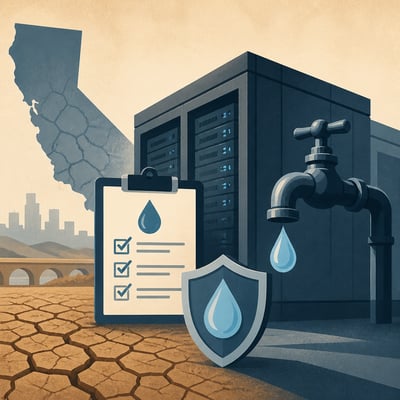
California is turning data center growth into a regulatory and infrastructure debate.
Lawmakers are advancing water and energy disclosure, environmental review, and special-rate measures, while utilities, technology companies, and communities contest who pays for grid and water infrastructure and where facilities can be built.
If you read one thing
It provides the clearest broad overview of California’s water-disclosure, siting, and local-opposition fight over data center growth.
The counter-case
It presents the growth-sensitive side of the dispute, including industry concerns that regulation could constrain data center expansion.
The evidence
It adds distinct, quantified evidence on special electricity rates, interconnection rules, and the grid costs associated with data center demand.
The evidence
It documents the water-scarcity and environmental-justice exposure that motivates stronger disclosure and oversight.
Water disclosure is becoming an approval and licensing condition
California proposals would require projected and actual water-use reporting, water-source and supply assessments, drought planning, and payment for water infrastructure tied to new or expanded data centers. The measures have advanced politically, but implementation remains pending.
Grid-cost responsibility is shifting toward data center operators
California lawmakers are advancing special electricity-rate and interconnection rules intended to prevent data-center generation and grid-expansion costs from being spread across ordinary ratepayers. The CPUC retains responsibility for the detailed framework, with tariffs and interconnection rules targeted for July 2027.
Community opposition is a direct siting constraint
Opposition is translating into permanent bans, moratoria, approval reversals, project challenges, and delayed decisions across California communities. It is reinforcing demands for environmental review, resource safeguards, and clearer responsibility for infrastructure impacts.
Expansion remains exposed to water stress and oversight gaps
Projects continue to intersect with stressed water supplies, groundwater and surface-water risks, and vulnerable communities, while public records often lack consistent information on sources, cooling systems, and environmental review. Proposed disclosure and planning rules improve visibility but do not remove the underlying resource and siting risks.
first six months of 2026
period covered by the lobbying analysis
“An analysis by CalMatters of lobbying activity during the first six months of 2026 found that utilities, technology companies and their proxies spent millions lobbying state lawmakers, with data center bills a primary focus.”
millions dollars
lobbying spending by utilities, technology companies and proxies
“An analysis by CalMatters of lobbying activity during the first six months of 2026 found that utilities, technology companies and their proxies spent millions lobbying state lawmakers, with data center bills a primary focus.”
seven bills
California bills regulating data centers
“Companies backing data center construction are flooding Sacramento with cash as California lawmakers advance seven bills that would regulate the facilities.”
AB 1577
bill requiring data center water-use disclosure or estimates
“Among the measures are bills requiring disclosure or estimates of water use, including AB 2619, AB 1577 and AB 2469. SB 887 would require environmental reviews for all data center projects while offering expedited approval to facilities that meet water- and energy-conservation standards.”
SB 887
bill requiring environmental review for data center projects
“Among the measures are bills requiring disclosure or estimates of water use, including AB 2619, AB 1577 and AB 2469. SB 887 would require environmental reviews for all data center projects while offering expedited approval to facilities that meet water- and energy-conservation standards.”
Contested Issue
Should California impose mandatory data-center water disclosure and related environmental requirements, or limit such regulation to avoid impeding AI and data-center growth?
Multiple sources support mandatory projected and actual water-use disclosure, water-supply assessments, and broader environmental oversight as necessary for planning, accountability, and public trust. Other reporting documents concerns from Governor Newsom and prior regulatory outcomes that broad disclosure and related requirements could hinder AI growth and data-center expansion.
Mandatory oversight
California should require standardized water-use disclosures and tie data-center approvals or licenses to water planning and environmental accountability.
Growth-sensitive regulation
Broad water-disclosure and related regulatory requirements should be limited or moderated because they may hinder AI and data-center expansion.
The new articles largely reiterate California’s existing push toward water and energy disclosure, approval conditions, and data-center infrastructure cost responsibility. They add implementation detail on water-supply assessments, drought planning, and potential infrastructure-cost allocation but do not materially change the Topic’s underlying state.
Previously
California lawmakers are advancing measures that would require data center developers to disclose projected water use and operators to report actual consumption, with some bills also conditioning approval on water plans and related infrastructure costs. The proposals respond to research describing incomplete public records and planned facilities in water-stressed areas such as the Central Valley and Imperial Valley. The broader debate also includes electricity cost allocation, permitting timelines, cooling choices, and whether new requirements could slow investment; Governor Gavin Newsom’s decisions remain important to the legislative outcome.
California’s data-center debate has broadened from disclosure requirements into a wider fight over environmental review, siting, grid costs, and infrastructure responsibility. Local opposition has also produced concrete bans, moratoria, and delayed approvals, while the CPUC and industry groups become more central.
California’s debate has moved from general consideration of disclosure rules toward advancing legislation with broader approval, infrastructure-cost, and electricity-rate consequences. The Imperial County example also sharpened concerns that approvals may precede confirmed water arrangements.