
 AI Governance
 Data Centers
 Drones
 Climate
 Privacy
 Bob Dylan

Data Centers Quick Briefing
2026-11-11
Data-Center Expansion Faces Uneven Power and Regulatory Constraints
of Play
The buildout remains active, but deliverable power and jurisdiction-specific approvals continue to shape where and when capacity can come online. A new post-election assessment broadens concern about restrictions on later-stage plans, while a small Missoula project is actually on hold. The key distinction is between potential exposure and demonstrated capacity delays.
What's New?
Power delivery remains a constraint on where capacity can be built
AI infrastructure expansion continues, but access to deliverable power and transmission varies by market. Detroit, for example, lacks the transmission infrastructure DTE says hyperscale facilities need. A power-first strategy does not itself establish firm service or energized capacity.

Permitting and siting controls vary across jurisdictions
Texas grid-approval restrictions and Oregon’s permit pause coexist with local zoning controls; they do not establish a uniform construction halt. Proposed restrictions elsewhere should not be treated as enacted pauses.

What's Changed?
Post-election assessment broadens the regulatory-risk picture
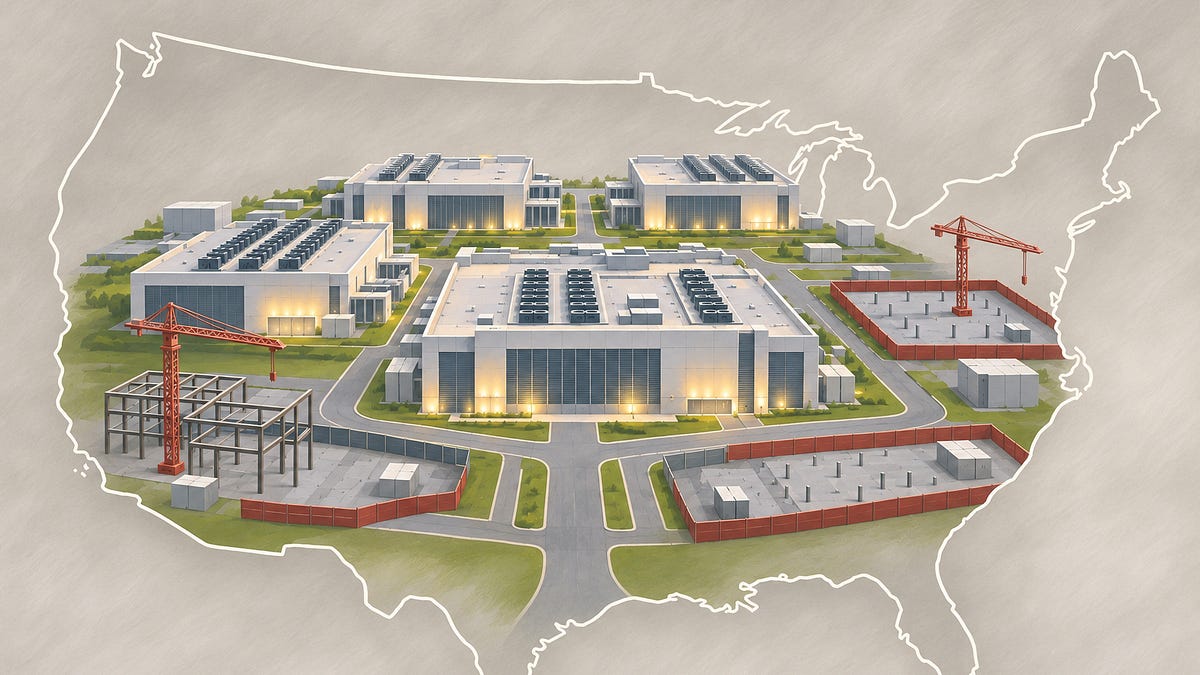
Relative to the prior focus on Texas and other individual jurisdictions, TrendForce identifies heightened risk in Texas, Georgia and Ohio after governors campaigned on tighter controls. It assesses exposure as concentrated in projects planned for 2028 and later, rather than most 2027 capacity already under construction. This is a risk assessment, not evidence of realized delays.
Missoula zoning dispute has reached court and paused a project
CubCloud AI is challenging Missoula’s data-center zoning ordinance under Montana’s Right to Compute Act. Its founder says a planned 2–3 MW facility is on hold. This adds a concrete project-level effect to the prior assessment that local controls reshape siting, although the facility is small.

What Matters?
Longer-dated capacity faces greater policy uncertainty
The new assessment strengthens the case that regulatory risk extends beyond individual local disputes. If campaign positions become binding restrictions, projects not yet under construction may face greater timing and siting uncertainty; the evidence does not establish how much capacity will be delayed or relocated.
Siting constraints can affect small facilities as well as hyperscalers
The Missoula case demonstrates an actual hold, not merely expressed opposition, and tests the relationship between state computing protections and local zoning. Its broader legal effect remains unresolved.
What's Next?
Determine the actual reach of Texas restrictions
The existing watchpoint remains unresolved: identify which projects and grid approvals are affected by the audit and when reviews resume. Distinguish those effects from any broader construction moratorium that may be proposed.
Watch whether political risk becomes project-level delay
Track enacted measures and affected projects in Georgia and Ohio, as well as implementation of Oregon’s pause. Binding restrictions or documented deferrals would strengthen the longer-term risk assessment; campaign pledges alone would not.
Test whether secured power becomes operating capacity
Watch for firm service, transmission and energization milestones, and for whether dedicated generation clears permitting constraints. Those outcomes would distinguish a workable power-first strategy from one that shifts the bottleneck.