
 AI Governance
 Data Centers
 Drones
 Climate
 Privacy
 Bob Dylan

Data Centers Quick Briefing
2026-11-04
Power and Approvals Constrain Expansion Despite Infrastructure Progress
of Play
The prior assessment remains broadly intact: data-center expansion depends on deliverable power and jurisdiction-specific approvals, not simply announced demand. Teesside provides a tangible infrastructure step, while policy proposals and local ballots add uncertainty rather than demonstrating a sector-wide slowdown. The decisive question remains whether planned power and approvals translate into capacity on schedule.
What's New?
Deliverable power remains a constraint on expansion
Power access continues to shape where and when capacity can be built. Oracle’s preference to secure power before choosing hardware illustrates the constraint, but a power-first plan is not evidence of an energized facility.

Siting controls differ across jurisdictions
Approval pauses, zoning rules and proposed ballot restrictions create different obstacles rather than a uniform halt. Their aggregate effect on capacity and relocation remains unclear.
Dedicated generation shifts rather than removes delivery risk
Onsite power can reduce dependence on grid delivery, but reliable round-the-clock supply still requires permits, fuel and equipment. Industry experts regard hybrid grid and onsite supply as more practical than fully off-grid operation.

What's Changed?
Teesside power infrastructure advances to land acquisition
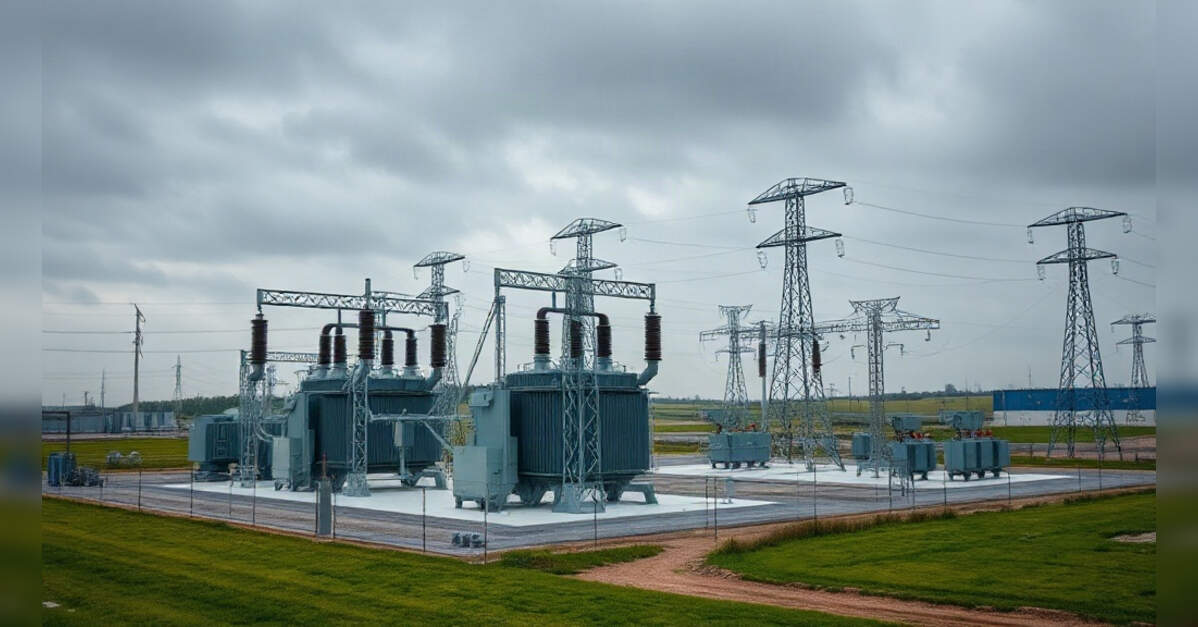
National Grid acquired more than 70 acres for a proposed 400 kV substation contracted to support a private-wire network serving a proposed AI data center and battery. Its design exceeds 1 GW of import and export capacity; land acquisition is not delivered power.
Policy pressure is visible, but outcomes remain unsettled
Trump proposed that new large data centers generate their own electricity. Separately, new reporting identified 41 local data-center ballot measures scheduled for November 3 across 10 states: 28 restrictive and 13 facilitative. Neither the proposal nor the reported ballot lineup establishes new operating requirements or election outcomes.
Russia reserves data-center capacity for government use
Following strikes on digital infrastructure, a Russian decree requires operators to reserve 10% of capacity for government operations and requires security-service approval for companies seeking foreign data-center services. The effect on commercial availability is not yet quantified.

What Matters?
Power commitments still need a physical delivery test
The Teesside acquisition strengthens evidence of concrete infrastructure preparation, not of resolved power scarcity. It reinforces the prior distinction between planned connection capacity and electricity actually available to a data center.
Political scrutiny may alter siting, but its net effect is unknown
The ballot lineup broadens the evidence of local scrutiny, while the mix of restrictive and facilitative measures cautions against assuming a uniform anti-development shift. Results and affected projects are needed to establish consequences.
Onsite-power policy would not eliminate grid constraints
The federal proposal gives policy prominence to dedicated generation, but the reported permitting, fuel and equipment constraints support the prior assessment that it substitutes another delivery chain for grid dependence rather than removing execution risk.
What's Next?
Establish ballot outcomes and affected capacity
Watch which local measures passed and whether they change approvals, costs or schedules for identifiable projects. The available report describes the lineup, not results.
Resolve the Texas grid-approval watchpoint
Watch for the scope and outcome of the Texas grid review, including which applications resume and whether schedules or capacity actually change. The current evidence does not establish losses from the approval freeze.

Test power plans against delivery
Watch for a construction and energization schedule at Teesside and for concrete implementation of the onsite-power proposal. Delivered electricity and infrastructure costs would be more informative than announced capacity or policy intent.