
 AI Governance
 Data Centers
 Drones
 Climate
 Privacy
 2026 Maine Senate
 Bob Dylan
UNICEF Maps Children’s Climate Risks
Coverage from Frontiers, Vreme, and others
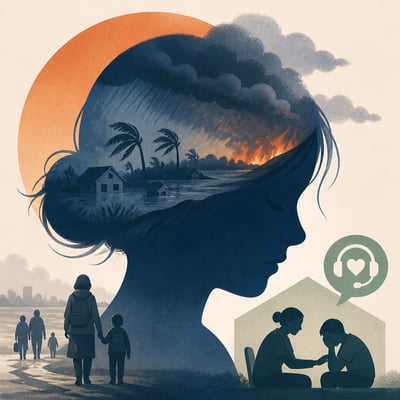
UNICEF reporting indicates that nearly every child worldwide is exposed to at least one climate hazard, while about half face three or more overlapping threats such as drought, extreme heat, floods, storms, and wildfires.
These hazards are disrupting schooling, damaging infrastructure, worsening food and water insecurity, and increasing risks from infectious disease, with children in highly vulnerable countries facing the greatest effects. The evidence also links climate-related distress and disaster exposure with greater psychiatric symptoms among psychiatric outpatients, underscoring the need for resilient health, education, water, sanitation, and social-support systems.
The core story is unchanged, but the current version sharpens the framing around repeated climate shocks and adds a clearer mental-health dimension from the South Korean clinical study. It also slightly broadens the service implications by emphasizing social-protection systems alongside health, education, and water/sanitation.
The core UNICEF finding is unchanged, but the framing has been tightened: the current version adds UNICEF’s 2026 report label and shifts the emphasis toward resilience in public services and infrastructure. It also incorporates the South Korean mental-health study more directly into the story of climate-related distress and resilience.
The story now adds a more quantified UNICEF assessment of children’s exposure to climate hazards and broadens from general wellbeing impacts to specific infrastructure and service disruptions. It also introduces a new mental-health study linking climate anxiety to psychiatric and somatic symptoms.
- Nearly every child faces at least one climate hazard; about half face three or more.
- Climate hazards are damaging roads and bridges and disrupting essential services.
- A South Korean study links climate-change anxiety to psychiatric and somatic symptoms.
- UNICEF released its assessment in June 2026.
- UNICEF explicitly calls for emissions cuts and resilient child-focused systems.
The story is now framed more explicitly around children’s mental health and unequal vulnerability, rather than mainly broad climate-harm exposure. It also adds a wider set of place-based examples and health mechanisms, sharpening the sense that climate impacts are both developmental and unevenly distributed.
The story has sharpened from a broad climate-and-mental-health theme into a more child-centered UNICEF-led narrative, with much stronger emphasis on overlapping hazards, schooling disruption, and adaptation needs. It also now includes clearer geographic examples and a more current 2026 framing.
- UNICEF repeatedly estimates many children face multiple overlapping climate threats.
- Catherine Russell is quoted in the climate-risk warnings.
- Recent coverage is mostly from June 2026.
- Afghanistan, Bangladesh, and Papua New Guinea are newly emphasized as examples.
- Adaptation levers now center on schools, health systems, and social services.
The story has shifted from a broad climate-and-mental-health resilience frame toward more concrete evidence of who is most affected and where strain is showing up, especially children and healthcare systems. It also newly emphasizes adaptation gaps in child-focused planning, disaster response, and housing-related risks such as flooding and mold.
The story has become more operational and specific, shifting from broad climate-and-mental-health harm to concrete response systems and care-delivery constraints. It now adds new actors and examples of adaptation, while keeping the core health-risk framing intact.
The story shifts from mainly disaster-linked mental health harms to a broader framing in which slow-onset climate changes also drive anxiety, distress, and loss of control. It also becomes more operational, emphasizing the gap between rising demand and limited behavioral health surge capacity.
Climate-related disasters and displacement are increasingly linked to mental health harms, with children, migrants, and other vulnerable groups facing elevated stress, trauma, and care barriers. Recent coverage emphasizes operational responses such as crisis lines, shelter-based support, and climate-event response teams, alongside persistent gaps in staffing, licensing, and coordination.