
 AI Governance
 Data Centers
 Drones
 Climate
 Privacy
 2026 Maine Senate
 Bob Dylan
UK Faces Repeated Extreme Heat
Coverage from Tech Times, Heatmap, and others
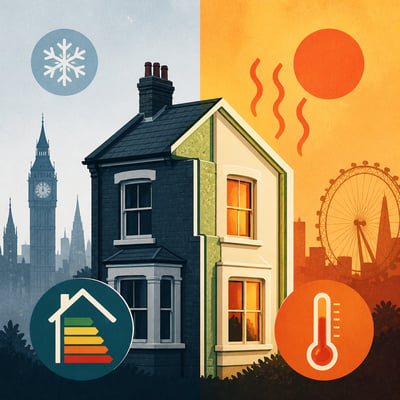
Repeated and intensifying heatwaves are exposing weaknesses in the UK’s ability to protect people, operate transport, cool buildings, and manage water supplies.
Homes, care settings, schools, hospitals, workplaces, and public transport were not designed for sustained high temperatures, while heat-related health and wildfire risks are increasing. Climate assessments call for expanded cooling, urban shading, water planning, and broader adaptation investment as extreme heat becomes more likely.
The story shifts from documenting heatwave mortality and disruption toward diagnosing systemic adaptation failures across housing, transport, public services, and water planning. It adds more specific evidence about unequal exposure and London’s limited transport cooling, alongside named local and political responses.
The main update is sharper mortality attribution: the current version adds a specific estimate that about 1,140 deaths were linked to human-caused additional heat, alongside the UKHSA’s 2,877-death estimate. It also tightens the operational picture by emphasizing disruption to rail, schools, meetings and emergency services during the 2026 heatwaves.
The story has broadened from general UK heat-adaptation warnings into a more concrete 2026 event-driven crisis, with record heatwaves already producing measurable mortality and disruption across health, transport, energy, and wildfire systems. It also now emphasizes uneven implementation and funding gaps, alongside stronger attribution claims that tie event severity to human-driven warming.
- Record UK and Europe heatwaves in May–July 2026 caused transport, wildfire, and health-system impacts.
- England and Wales heat deaths were estimated at roughly 2,700–2,877 during those events.
- UK advisers are calling for about £11 billion a year in adaptation spending.
- Cooling demand is now pressuring electricity planning and supply.
- Heat attribution studies increasingly link event severity and mortality to human warming.
The story has become more explicitly operational: heat adaptation is now centered on concrete cooling and temperature-control measures for care homes, hospitals, schools, and workplaces, rather than just broad resilience warnings. The current version also sharpens the framing around labor conditions and official authority, with the Climate Change Committee presented as the dominant source.
The story has broadened and sharpened: adaptation is now framed as a more urgent, costed response to multiple climate stresses, not just extreme heat. Heat remains central, but the current version more explicitly ties it to mortality, vulnerable institutions, and a wider gap between existing infrastructure and future conditions.
The story has broadened from a London retrofit tradeoff into a wider UK adaptation agenda centered on extreme heat. The new emphasis is on institutional warnings, policy proposals, and system-level resilience across health, transport, workplaces, housing, flood, and water infrastructure.
- UK Climate Change Committee is now the main source of adaptation proposals.
- Policy ideas include maximum indoor and outdoor temperature rules.
- Annual adaptation spending is estimated at around £11 billion.
- Recent heatwaves brought record temperatures and transport disruption.
- Heat risk now extends to hospitals, schools, workplaces, and water systems.
London housing retrofit is showing a clear tradeoff: upgrades can cut winter energy use and emissions, but older homes still face overheating during hotter summers. The main pressure is adapting existing buildings for both efficiency and heat resilience, while retrofit capacity and funding remain limited.