
 AI Governance
 Data Centers
 Drones
 Climate
 Privacy
 2026 Maine Senate
 Bob Dylan
India’s Solar Boom Meets Its Grid
Coverage from Arkansas Online, WKMG News 6 & ClickOrlando, and others
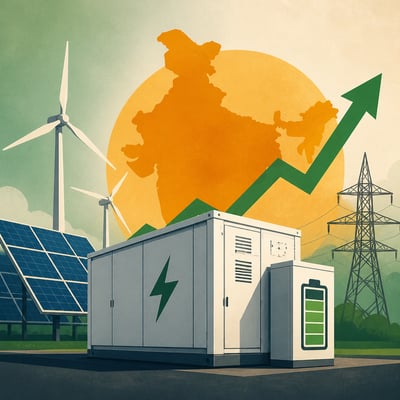
India is expanding renewable capacity rapidly, but transmission congestion, limited storage, and inflexible coal generation are preventing the power system from absorbing all available solar and wind output.
Curtailment is concentrated in major renewable-producing states such as Gujarat and Rajasthan, while rising cooling and agricultural-pumping demand increases the need for electricity after solar production declines. India is responding with expanded transmission, battery and pumped storage, hybrid renewable projects, digital grid management, and proposed storage and grid-forming-inverter requirements for new projects.
If you read one thing
It gives the clearest broad overview of how transmission, storage, and coal inflexibility are limiting India’s rapidly expanding renewable system.
Best explainer
It explains the transmission bottleneck with concrete 2026 curtailment and delayed-infrastructure figures while showing how storage could help.
Latest development
As the Story So Far driver, it updates the topic with evidence that clean power is meeting demand growth while grid flexibility remains necessary.
The evidence
It provides the clearest policy response by detailing proposed storage-duration and grid-forming-inverter requirements for new renewable projects.
Transmission is lagging renewable buildout
Transmission congestion remains a primary limit on India’s ability to use rapidly expanding renewable capacity, particularly in Gujarat and Rajasthan. Line construction is slower than generation additions, contributing to major curtailment, including nearly 11 TWh of solar over 15 months and 300 GWh in the first quarter.
Storage is essential but underscaled
India has about 10.4 GW of operational battery and pumped storage against roughly 74 GW expected to be needed by 2032, leaving a large flexibility gap. Proposed mandates would require at least 10% co-located storage for new solar and wind projects, with minimum duration rising from two hours in 2027 to four hours from 2029, but remain proposals rather than delivered capacity.
Coal inflexibility creates an afternoon-to-evening mismatch
Coal still supplies roughly 70% of actual electricity generation and cannot readily ramp down during afternoon solar peaks, leaving thermal generation online while renewable power is curtailed. Heat-driven cooling and agricultural-pumping demand increase evening pressure, with a reported 2.57 GW late-evening deficit during a heatwave despite record clean-capacity growth.
nearly 11 terawatt-hours
curtailed solar generation
“India curtailed nearly 11 terawatt-hours of solar generation in the last 15 months—enough to power about 10 million homes—according to government data and research by energy think tank Ember.”
about 3 gigawatts
battery storage capacity
“The government said in July that the country had about 3 gigawatts of battery storage and 7.4 gigawatts of operational pumped-storage capacity. It expects storage needs to reach about 74 gigawatts by 2032.”
7.4 gigawatts
operational pumped-storage capacity
“The government said in July that the country had about 3 gigawatts of battery storage and 7.4 gigawatts of operational pumped-storage capacity. It expects storage needs to reach about 74 gigawatts by 2032.”
about 80% percent
annual transmission construction targets achieved
“New power lines can take at least three years to build, and India has achieved only about 80% of its annual transmission construction targets over the past five years, according to Ember research.”
nearly two-thirds
share of renewable-energy curtailment attributed to grid and transmission constraints
“Clean-energy think tank Ember reported that grid and transmission constraints accounted for nearly two-thirds of renewable-energy curtailment, which totaled 300 gigawatt-hours in the first quarter of the year.”
Clean power growth holds coal generation flat while industrial emissions rise
Clean energy supplied India’s entire 7% electricity-demand increase over the period, helping keep coal generation and power-sector emissions flat for the first time in more than 50 years. However, steel, cement, and other industrial emissions continued to push total national emissions higher, showing that power-sector progress has not yet translated into overall emissions reductions.
Previously
India is expanding renewable capacity rapidly, but transmission congestion, limited storage, and inflexible coal generation are preventing the power system from absorbing all available solar and wind output. Curtailment is concentrated in major renewable-producing states such as Gujarat and Rajasthan, while rising cooling and agricultural-pumping demand increases the need for electricity after solar production declines. India is responding with expanded transmission, battery and pumped storage, hybrid renewable projects, digital grid management, and proposed storage and grid-forming-inverter requirements for new projects.
The story is more concretely quantified: renewable curtailment reached nearly 11 TWh, while proposed storage rules now specify capacity and duration requirements. The framing also shifts modestly toward the operational challenge of integrating capacity rather than merely adding it.
The story now includes a concrete proposed policy response: certain new government-backed renewable projects would need storage and grid-forming inverters from 2027. Storage requirements are also quantified more precisely, reinforcing a shift from diagnosing grid constraints toward enforcing flexibility measures.