
 AI Governance
 Data Centers
 Drones
 Climate
 Privacy
 2026 Maine Senate
 Bob Dylan
Climate Pollution Disrupts Nature’s Scents
Coverage from Yale E360, Mother Jones, and others
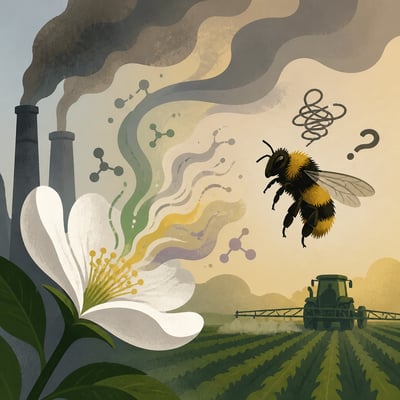
Climate change, ozone and other air pollutants, and agricultural chemicals are changing the chemical signals that plants and animals use to find food, pollinate, reproduce, and navigate.
Experiments and modeling indicate that degraded floral scents can reduce bee recognition, hawkmoth visits, and the distance at which pollinators detect flowers, while altered pheromones may disrupt insect mating. The consequences for crop pollination, biodiversity, and scent-linked cultural traditions remain uneven across species and regions, with adaptation possible for some organisms but not others.
The story now adds a policy and public-health dimension: air-quality rules have reduced some pollutants in parts of the U.S. and Europe, but exposure remains high enough that scent disruption is still a live concern. It also broadens from bees and moths to more insect groups and from pollination alone to crop productivity and cultural odor loss.
The story now places greater emphasis on how climate warming and biodiversity loss, alongside pollution, are threatening plant scents beyond pollination alone. It also adds a clearer distinction that some insects can adapt to changed odors, but specialized species remain vulnerable.