
 AI Governance
 Data Centers
 Drones
 Climate
 Privacy
 2026 Maine Senate
 Bob Dylan
Warming Reshapes Ecosystems And Food Systems
Coverage from Inside Ecology, Foreign Affairs, and others
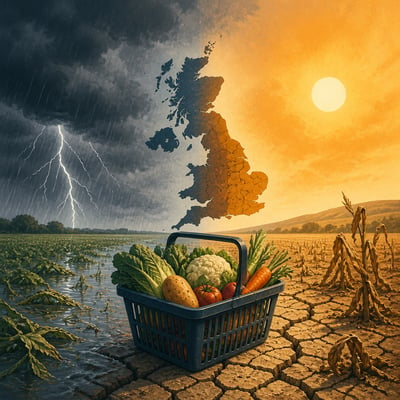
Warming and increasingly variable extremes are already altering species timing, migration, abundance, forest dynamics, marine ecosystems, and agricultural conditions.
Long-term observations and recent surveys document ecological shifts, while models project greater wildfire exposure, forest disturbance, and species vulnerability under higher emissions. Adaptation responses increasingly rely on flexible conservation, improved monitoring, crop and water management, early-warning systems, and resilient infrastructure, but regional outcomes remain highly uneven.
The story has broadened from general climate-driven shifts in timing and agricultural/forest stress to a more explicit, multi-system account of observed ecological impacts and future risk pathways. The new version also places greater weight on adaptation responses and on marine and invasive-species pressures, especially in the Mediterranean.
The framing has shifted from a broad catalogue of climate impacts to a more operational story about how warming is changing seasonal timing, disturbance regimes, and adaptation needs across food systems and ecosystems. The update also adds clearer regional emphasis and a stronger split between modeled/trend-based evidence and direct observation.