
 AI Governance
 Data Centers
 Drones
 Climate
 Privacy
 2026 Maine Senate
 Bob Dylan
Heat Safety Rules Reach Student Sports
Coverage from Grist, Yale Climate Connections, and others
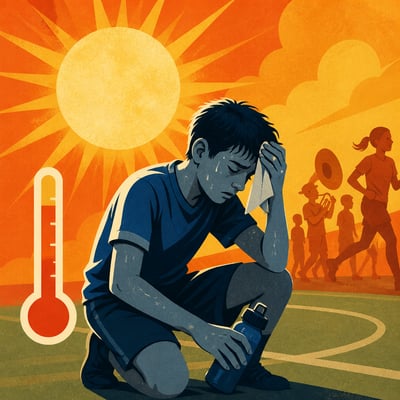
Hotter conditions are increasing heat-illness risks for children and student athletes during summer and early fall sports, especially in cities and communities with limited cooling and medical resources.
Schools, states, coaches, and sports organizations are responding with measures such as heat monitoring, modified schedules, acclimatization, emergency response plans, cooling equipment, and expanded athletic-trainer requirements. The effectiveness of these protections depends on funding, staffing, enforcement, and whether athletes feel able to report symptoms or stop activity.
If you read one thing
It provides the clearest broad overview of rising heat risks for young athletes and the unequal resources available to protect them.
The evidence
It adds substantive evidence on expanding state policies, federal coverage limits, New Hampshire rules, and uneven staffing and funding capacity.
Escalating heat risk for young athletes
Hotter conditions are increasing heat-illness risks during summer and early-fall sports, conditioning, and other prolonged outdoor activities. Exposure is amplified in urban settings and for teams without safe indoor spaces or adequate cooling resources.
Heat-safety rules are expanding
States and schools are responding with wet-bulb monitoring, emergency plans, acclimatization protocols, modified schedules, and practice delays or cancellations. The policy response is broadening, but federal coverage would remain limited and protections vary by jurisdiction.
Implementation capacity is uneven
Actual protection depends on funding, athletic-trainer availability, cooling equipment, indoor space, and emergency-response capacity. Low-income districts and schools without athletic trainers may struggle to meet or consistently enforce heat-safety requirements.
The supplied articles reiterate the existing finding that extreme heat raises risks for young athletes and that acclimatization and school-based protections can reduce harm, without establishing a material new development.
Previously
More intense and prolonged heat is increasing the risk of heat illness for children participating in outdoor sports, marching band and conditioning activities. Schools and youth teams are adopting measures such as wet-bulb temperature monitoring, emergency response plans, cooling equipment and athletic-trainer requirements, but access remains uneven because of funding gaps, staffing shortages and inconsistent state protections.
The story now includes a potential federal OSHA heat-safety framework, broadening the response beyond state and school policies. It also emphasizes acclimatization and athletes’ ability to report symptoms as important determinants of whether existing protections work.