
 AI Governance
 Data Centers
 Drones
 Climate
 Privacy
 2026 Maine Senate
 Bob Dylan
Europe’s Drought Disrupts Rivers and Health
Coverage from Mercury News, POLITICO, and others
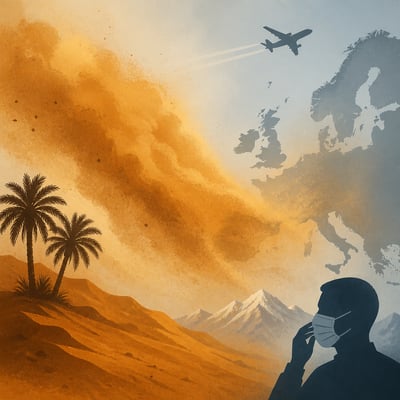
Europe is facing increasingly consequential heat and water stress, with drought lowering the Danube, Rhine and other rivers, disrupting freight, agriculture and industrial activity, and constraining cooling at nuclear plants.
The same climate pressures are linked in the material to food insecurity, longer pollen seasons, greater heat-health risks and more prominent Saharan dust exposure. The evidence points to growing cross-sector vulnerability, while the precise contribution of human-driven climate change varies by impact and remains uncertain for some dust trends.
The story broadens from primarily Danube-centered disruption to a wider European waterway and supply-chain problem, with the Rhine now explicitly affected. The framing also shifts toward interconnected, cross-sector vulnerability, while most climate, health and nuclear-cooling impacts are confirmed rather than fundamentally changed.
The story now places stronger emphasis on Europe’s climate risks as overlapping operational pressures, with Saharan dust and heat receiving more explicit attention alongside river drought impacts. It also adds more specific evidence and attribution framing, including historical comparisons and projections.
The story broadens from river, nuclear, and farm disruptions into a wider systems-impact narrative that now explicitly includes fuel supply, public health, biodiversity, and cross-border infrastructure strain. It also adds new health and climate-exposure claims, especially around pollen, heat, and mosquito-borne disease risks.
- Fuel movements are being restricted by low river levels.
- Earlier and more intense pollen seasons are adding health burdens.
- Mosquito-borne disease risks are expanding in Europe.
- Wildfire and ecosystem risks are now explicitly elevated.
- Water scarcity is framed as causing cascading system-wide disruptions.
The story has shifted from a broad Europe dust-and-drought risk narrative to concrete 2026 river-low impacts across Central and Eastern Europe, especially on shipping and nuclear cooling. It also gives adaptation a more operational tone, emphasizing water restrictions and farm adjustments alongside ongoing dust and health risks.
- Record-low Danube and Rhine levels disrupted shipping and tourism in 2026.
- Paks and Cernavoda nuclear plants reduced output or shut down due to cooling constraints.
- Farmers and authorities implemented water restrictions and crop/cultivation changes.
- Research now weighs adaptation policies against differing farmer risk preferences.
- The risk picture extends to Alpine snowmelt and cross-border dust exposure.
The story broadened from a mostly Europe-centered climate impacts narrative into a clearer, better-measured dust-risk story that now also includes forecast concern for the U.S. northern Plains. It also adds a stronger emphasis on measurable dust exposure and on adaptation gaps in agriculture and infrastructure.
Recent material shows Europe experiencing several linked climate impacts: hotter and drier conditions are worsening drought and food stress, while Saharan dust is affecting air quality, health, transport, and snow melt. The signal is coherent and recurring, with adaptation needs outpacing policy response in several places.