
 AI Governance
 Data Centers
 Drones
 Climate
 Privacy
 2026 Maine Senate
 Bob Dylan
Climate Change Shrinks Hajj Safety Window
Coverage from Mongabay, Yale E360, and others
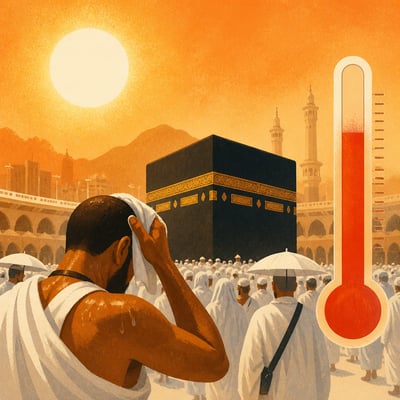
Human-caused warming is making extreme heat more common in historically cooler months during the Hajj pilgrimage in Mecca, shrinking the seasonal window for safer conditions.
World Weather Attribution researchers estimate that May temperatures are now about 3.5°C warmer than in a preindustrial climate, while heat above 40°C is becoming more frequent. Saudi Arabia has expanded cooling and heat-response measures, but researchers warn that continued warming could outpace adaptation and expose millions of pilgrims to greater health risks.
The update sharpens the heat-risk assessment by adding a clearer frequency estimate for dangerous May temperatures and reinforcing that warming is outpacing Saudi adaptation efforts. It also reframes the 2024 Hajj as having been even more extreme than before, with reported temperatures above 50°C.
The story now emphasizes that Hajj heat risk is worsening across more of the pilgrimage window and may increasingly outpace Saudi mitigation measures. It also reframes the threat around prolonged outdoor exposure and crowding, not just peak temperatures.
The story now includes sharper quantified attribution and longer-range projections, making the heat threat appear more severe and enduring than before. It also adds a new equity angle, emphasizing that some pilgrims may miss cooling protections and remain especially exposed.
- May temperatures are now about 3.5°C above preindustrial levels.
- 40°C May heat is expected every two to three years.
- 97% of Hajj pilgrimages could face dangerous heat by 2100 under 3°C warming.
- Cooling resources may not reach all pilgrims, especially those without permits.
- Older and poorly acclimatized pilgrims face elevated vulnerability.
The story has broadened from a single attribution finding into a denser, more corroborated body of reporting that emphasizes multiple attribution analyses and concrete heat-protection responses. The main update is stronger confirmation that Hajj heat risk is intensifying now, not just in long-range projections.
Climate change is making Hajj in Mecca hotter and more dangerous by extending extreme heat into months that were previously cooler. A new World Weather Attribution study says the safe seasonal window for the pilgrimage is shrinking as May temperatures increasingly resemble summer conditions from past decades. The issue matters because Hajj is a major open-air religious gathering, and recent heat-related deaths have already pushed Saudi authorities to expand cooling and other protections.