
 AI Governance
 Data Centers
 Drones
 Climate
 Privacy
 2026 Maine Senate
 Bob Dylan
Cities Seek Better Ways To Cut Heat
Coverage from Mercury News, Climate Central, and others
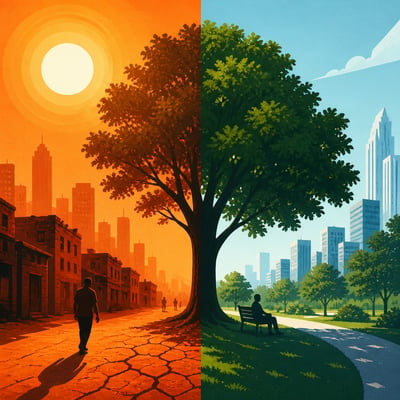
Urban neighborhoods are becoming hotter as roads, buildings and other hard surfaces absorb and release heat, with exposure often greatest where tree cover and green space are limited.
Research across U.S., European and Asian cities shows that trees, layered vegetation, reflective materials, permeable surfaces and public cooling measures can reduce heat stress, but their effectiveness depends on local climate, street design, airflow and maintenance. The evidence also highlights a persistent equity concern: lower-income communities and many communities of color often face greater heat exposure and fewer cooling resources.
The story has broadened from general urban heat mitigation into a more explicit equity-and-vulnerability frame. The new version also adds stronger emphasis on public cooling services and maintenance needs as necessary complements to tree planting and built-environment retrofits.
The story has shifted from a broad heat-mitigation discussion to a more operational, implementation-focused account of cities actively testing retrofits like cool roofs, depaving, and rain gardens. The framing also now more explicitly ties heat adaptation to runoff management and equity concerns in specific neighborhoods.