
 AI Governance
 Data Centers
 Drones
 Climate
 Privacy
 2026 Maine Senate
 Bob Dylan
Biochar Gains in Wetland Carbon Storage
Coverage from EurekAlert! and others
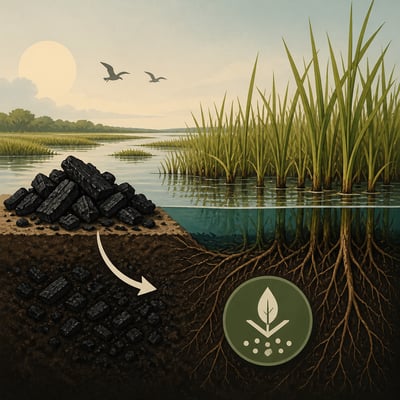
Research indicates that placing biochar in rewetted peatlands and tidal wetland sediments can increase carbon retention by slowing decomposition and shifting stored carbon toward more stable forms.
A biogeochemical model found gains over a 100-year period, while a one-year field experiment at the Yangtze River estuary recorded higher sediment carbon and lower respiration after biochar application. The findings suggest that wetland conditions may improve the effectiveness and resource efficiency of biochar, but methane effects, long-term durability, monitoring, and regulation remain unresolved.
The story has sharpened from a general research trend into more specific evidence that biochar can materially boost carbon storage in rewetted peatlands and tidal wetlands, especially with lower-stability biochars. The new field and model results also make the main remaining uncertainty clearer: methane and durability, not whether the effect exists.
The framing has shifted from biochar as a promising wetland carbon-storage approach to a more confident research consensus that it works better in waterlogged and coastal wetland settings. The main new emphasis is that deployment constraints—especially methane accounting and monitoring credibility—are now the dominant practical bottleneck.