
 AI Governance
 Data Centers
 Drones
 Climate
 Privacy
 2026 Maine Senate
 Bob Dylan
Antora Thermal Battery Cuts Industrial Gas
Coverage from Eurasia Review, ScienceNorway, and others
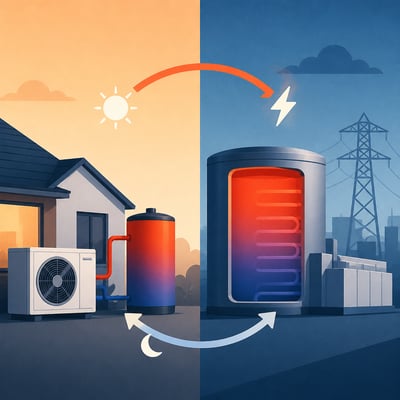
Thermal energy storage projects are being developed to turn surplus renewable electricity into dependable heat for industry and buildings.
Antora Energy’s 5-gigawatt-hour carbon-block system at POET’s South Dakota ethanol plant is the dominant development, designed to reduce natural gas use while absorbing otherwise curtailed wind power. A separate Minnesota project applies seasonal aquifer storage and electric heat pumps to heating and cooling, showing how thermal storage can serve both industrial and residential demand.
The story is largely stable, but the framing has shifted to emphasize Antora’s South Dakota project as the dominant development and to add that its technology can also convert stored heat back into electricity. The Minnesota project is now described more clearly as serving both heating and cooling, while the overall evidence on costs and operating performance remains limited.
The story has shifted from a broad discussion of thermal batteries to two concrete deployments now moving into execution: a large carbon-block industrial system in South Dakota and a Minnesota aquifer-storage project for buildings. The updated version also adds new commercial and policy details, including a pricing rider meant to support charging when renewable power is abundant.
- South Dakota project is being commissioned in phases.
- System capacity is 5 gigawatt-hours.
- More than 200 carbon blocks are being installed.
- Dakotas approved a pricing rider for charging with abundant renewables.
- The Heights will serve 850 homes and light-industrial buildings.
The story has shifted from a broad thermal-storage deployment narrative to a more clearly segmented field with separate industrial and residential product tracks. The biggest new wrinkle is the confirmation of a regulated industrial deployment in South Dakota, alongside a stronger emphasis on technical constraints and early-stage commercialization.
The biggest update is that thermal storage has moved from mostly developmental coverage to a clearer deployment and market-design story, led by Antora’s large South Dakota project entering commissioning. The narrative now also includes tariff changes from U.S. regulators, suggesting the sector is starting to depend on grid-market rules as much as hardware progress.
- Antora’s 5-gigawatt-hour South Dakota installation is entering commissioning.
- POET is identified as the industrial host for the project.
- Several U.S. state regulators approved a tariff for flexible industrial load.
- Thermal storage is now tied more explicitly to grid-balancing market design.
The story broadened from mainly compact residential and generic grid thermal storage into a clearer three-part market: home heat pumps, grid-scale power conversion, and industrial heat replacement. The new version also adds Antora Energy and POET, strengthening the industrial decarbonization angle.
Recent coverage shows thermal storage moving closer to practical deployment across two scales: compact batteries for residential heat pumps and larger systems for grid and building-scale heat storage. The repeated pattern is the same: store heat when electricity is cheap or abundant, release it when demand rises, reduce costs, and ease grid stress.