
 AI Governance
 Data Centers
 Drones
 Climate
 Privacy
 2026 Maine Senate
 Bob Dylan
Thermochemical Storage Targets Building Emissions
Coverage from Thermochemical Storage Tech Targets Building Emissions - Environment+Energy Leader, FM Industry, and others
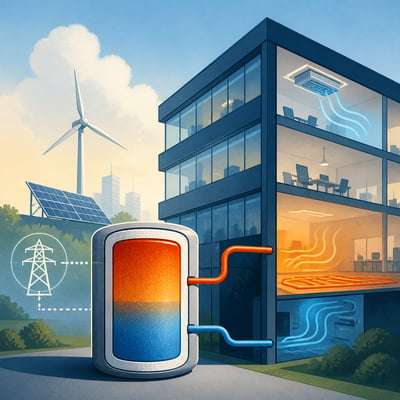
Thermochemical energy storage is being developed as a way to use surplus renewable electricity for heating and cooling when buildings need it, including in settings where heat pumps are difficult to install.
A University of Birmingham team has demonstrated a 5 kW laboratory system that responds to smart tariffs and grid signals and is seeking practical-scale pilots. The wider field also includes industrial thermal batteries using refractory bricks, recycled steel slag, molten salts and phase-change materials, linking storage innovation to lower-emission industrial heat and more flexible electricity demand.
The main update is a concrete laboratory milestone: Birmingham has now demonstrated a 5 kW thermochemical storage system and is testing it against smart tariffs and grid signals. The story also broadens slightly by naming a UK company partnership and positioning the technology alongside other industrial thermal-storage approaches.
The story has broadened from a Birmingham-led thermochemical prototype into a wider commercialization narrative around thermal storage for buildings and industry. The new framing emphasizes grid-flexible heating and cooling, multiple competing storage chemistries, and pilot-seeking activity rather than just lab innovation.