
 AI Governance
 Data Centers
 Drones
 Climate
 Privacy
 2026 Maine Senate
 Bob Dylan
Amazon Dung Beetles Face Heat Stress
Coverage from Eurasia Review, USA TODAY, and others
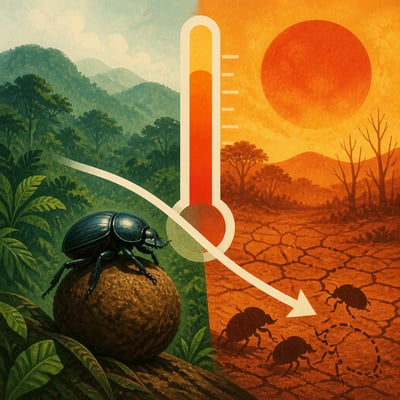
A study of nearly 5,000 dung beetles across elevational zones in Peru’s Amazon found that temperature was the main factor shaping where the insects could persist.
Diversity and abundance peaked near 500 meters, while populations declined sharply toward hotter lowlands and also decreased at colder higher elevations. Continued warming could force some species upslope, reduce suitable habitat, and weaken ecological functions such as nutrient cycling and parasite control.
The update adds clearer specificity about the study’s scale and authorship, and slightly strengthens the ecological implications by naming additional functions that may be affected. The core finding remains the same: temperature, not other resources, is the key constraint on dung beetles across elevation.
The story is reframed from a simple mid-elevation peak in dung beetle diversity to a narrower thermal-window finding: warmer lowlands are more clearly stressed, and colder high elevations also look less suitable. The current version also broadens the implications from local insect decline to a wider warning about Amazon warming and ecosystem-function losses.