Last Update: 09/17/2026 at 11:00 PM EST

India’s Solar Boom Meets Its Grid

Coverage from Arkansas Online, Spectrum News NY1, and others
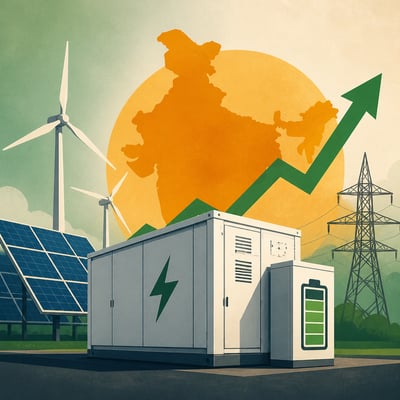
India’s Solar Boom Meets Its Grid topic image

India is expanding renewable capacity rapidly, but transmission congestion, limited storage, and inflexible coal generation are preventing the power system from absorbing all available solar and wind output.

Curtailment is concentrated in major renewable-producing states such as Gujarat and Rajasthan, while rising cooling and agricultural-pumping demand increases the need for electricity after solar production declines. India is responding with expanded transmission, battery and pumped storage, hybrid renewable projects, digital grid management, and proposed storage and grid-forming-inverter requirements for new projects.

Key Articles4 of 40 articles

If you read one thing

India’s Solar Boom Faces Grid and Storage Bottlenecks

It provides the clearest broad account of India’s solar expansion and the transmission and storage constraints limiting its impact.

Yale E360 / Fred Pearce

Best explainer

India Curtails 300 GWh of Renewable Power on Grid Bottlenecks

It explains how transmission bottlenecks are curtailing renewable output and how storage at pooling stations could reduce the losses.

ETEnergyworld.com

The evidence

India Drafts Battery Storage Mandate for New Renewable Projects

It provides concrete evidence of the storage gap and the proposed policy response linking new renewable projects to battery capacity.

Firstpost

Latest development

India’s Clean Energy Met Entire 7% Power Demand Increase

It updates the Topic with evidence that clean-energy growth is meeting demand while grid flexibility and coal dependence remain unresolved.

ET EnergyWorld / Vishwa Mohan
Key Issues

Transmission is lagging renewable buildout

India’s renewable expansion is constrained by transmission bottlenecks, especially around concentrated western generation in Gujarat and Rajasthan. Slow line construction and incomplete transmission targets are contributing to substantial curtailment, including nearly 11 TWh of solar over 15 months and 300 GWh in the first quarter.

Drawn from 5 articles

Storage is essential but underscaled

India has about 10.4 GW of operational battery and pumped storage against roughly 74 GW expected to be needed by 2032, leaving a large flexibility gap. Proposed rules would require new solar and wind projects to include at least 10% co-located storage, with minimum duration rising from two hours in 2027 to four hours from 2029, but these remain proposed requirements rather than deployed capacity.

Drawn from 5 articles

Coal inflexibility creates an afternoon-to-evening mismatch

Coal still supplies roughly 70% of actual electricity generation and cannot readily ramp down during afternoon solar peaks, leaving thermal generation online while renewable power is curtailed. Heat-driven cooling and agricultural-pumping demand shift pressure into the evening, with a reported 2.57 GW late-evening deficit during a heatwave despite record clean-capacity growth.

Drawn from 4 articles

Key Numbers

nearly 11 terawatt-hours

curtailed solar generation

India · last 15 months

India curtailed nearly 11 terawatt-hours of solar generation in the last 15 months—enough to power about 10 million homes—according to government data and research by energy think tank Ember.

WOWK 13 News and 3 other articles

about 3 gigawatts

battery storage capacity

India · July

The government said in July that the country had about 3 gigawatts of battery storage and 7.4 gigawatts of operational pumped-storage capacity. It expects storage needs to reach about 74 gigawatts by 2032.

WKMG News 6 & ClickOrlando and 3 other articles

7.4 gigawatts

operational pumped-storage capacity

India · July

The government said in July that the country had about 3 gigawatts of battery storage and 7.4 gigawatts of operational pumped-storage capacity. It expects storage needs to reach about 74 gigawatts by 2032.

WKMG News 6 & ClickOrlando and 3 other articles

about 80% percent

annual transmission construction targets achieved

India · over the past five years

New power lines can take at least three years to build, and India has achieved only about 80% of its annual transmission construction targets over the past five years, according to Ember research.

WOWK 13 News and 2 other articles

nearly two-thirds

share of renewable-energy curtailment attributed to grid and transmission constraints

Clean-energy think tank Ember reported that grid and transmission constraints accounted for nearly two-thirds of renewable-energy curtailment, which totaled 300 gigawatt-hours in the first quarter of the year.

OilPrice.com and 1 other article

Looking Back
176 Day Timeline
Mar 20Apr 17May 29Jun 26Aug 7Sep 4
The Story So Far
New development

Clean power growth holds coal generation flat while industrial emissions rise

Clean energy supplied India’s entire 7% electricity-demand increase over the period, helping keep coal generation and power-sector emissions flat for the first time in more than 50 years. However, steel, cement, and other industrial emissions continued to push total national emissions higher, showing that power-sector progress has not yet translated into overall emissions reductions.

Previously

India is expanding renewable capacity rapidly, but transmission congestion, limited storage, and inflexible coal generation are preventing the power system from absorbing all available solar and wind output. Curtailment is concentrated in major renewable-producing states such as Gujarat and Rajasthan, while rising cooling and agricultural-pumping demand increases the need for electricity after solar production declines. India is responding with expanded transmission, battery and pumped storage, hybrid renewable projects, digital grid management, and proposed storage and grid-forming-inverter requirements for new projects.

History
09/06/2026

The story is more concretely quantified: renewable curtailment reached nearly 11 TWh, while proposed storage rules now specify capacity and duration requirements. The framing also shifts modestly toward the operational challenge of integrating capacity rather than merely adding it.

09/04/2026

The story now includes a concrete proposed policy response: certain new government-backed renewable projects would need storage and grid-forming inverters from 2027. Storage requirements are also quantified more precisely, reinforcing a shift from diagnosing grid constraints toward enforcing flexibility measures.

All Articles40 articles
Important22 articles · CI Score 60 and above
Arkansas Online
India curtailed nearly 11 terawatt-hours of solar power over 15 months because transmission bottlenecks, limited storage, and inflexible coal generation constrained the national grid during rising summer demand.
9/6/2026 • Clean Energy & Emissions • General
Spectrum News NY1 / Sibi Arasu
India curtailed nearly 11 terawatt-hours of solar generation over 15 months because transmission congestion, limited storage, and inflexible coal plants constrained grid operations.
9/2/2026 • Clean Energy & Emissions • General
WKMG News 6 & ClickOrlando / Sibi Arasu
India curtailed nearly 11 terawatt-hours of solar power over 15 months as transmission congestion, limited storage, and rising heat-driven demand strained the national grid.
9/2/2026 • Clean Energy & Emissions • General
WOWK 13 News / Sibi Arasu
India curtailed nearly 11 terawatt-hours of solar power over 15 months because transmission congestion, limited storage, and inflexible coal plants constrained grid operations.
9/1/2026 • Clean Energy & Emissions • General
Ember Energy / Neshwin Rodrigues
Ember reports that India solar growth is driving renewable curtailment in FY 2025 to 2026 due to coal minimum-load limits and General Network Access battery charging constraints.
6/17/2026 • Clean Energy & Emissions • General
ETEnergyworld.com
Ember reported Q1 2026 renewable curtailment in India of about 300 GWh due to transmission bottlenecks, concentrated in north and west.
5/19/2026 • Clean Energy & Emissions • General
IEEFA / Vibhuti Garg, Tanya Rana
In India, FY2025 DISCOM losses and a fixed-cost versus fixed-charge revenue gap threaten grid modernization for large-scale renewable integration and reduce renewable output during transmission constraints.
6/30/2026 • Clean Energy & Emissions • General
MarketScale
India's power system recorded a 2.57-gigawatt evening deficit during a May 22, 2026 heatwave, causing outages in Chennai, New Delhi, Noida, and Odisha.
9/11/2026 • Clean Energy & Emissions • General
ETEnergyworld / Rajkiran Rai G
India accelerates non-fossil power deployment and increases emphasis on grid integration, HVDC transmission upgrades, and 400+ GWh storage targets through 2031-32.
5/12/2026 • Clean Energy & Emissions • General
CleanTechnica
Ember analysis on India grid operations in 2025-26 recommends about 10 GWh of battery storage to reduce solar and wind curtailment caused by coal technical minimum limits.
6/21/2026 • Clean Energy & Emissions • General
ET EnergyWorld / Vishwa Mohan
India's clean-energy sector met increased electricity demand between the first halves of 2024 and 2026, keeping power-sector carbon dioxide emissions flat while industrial emissions rose nationwide.
9/17/2026 • Clean Energy & Emissions • General
Firstpost
India's Central Electricity Authority is preparing rules requiring new solar and onshore wind projects to add battery storage from July 2027 to reduce curtailment and support grid stability.
9/4/2026 • Clean Energy & Emissions • General
IndexBox Inc.
India's Central Electricity Authority proposed battery storage requirements for new solar and wind projects in India, beginning with projects commissioned after July 1, 2027, to reduce renewable curtailment.
9/5/2026 • Clean Energy & Emissions • General
ET EnergyWorld
India's Central Electricity Authority proposed requiring battery storage and grid-forming inverters for new government solar and wind projects from July 2027.
9/5/2026 • Clean Energy & Emissions • General
The Bridge Chronicle / Abhijit Sherekar
India's Central Electricity Authority proposed storage and grid-forming inverter requirements for new government-backed solar and onshore wind projects from July 2027 across India.
9/4/2026 • Clean Energy & Emissions • General
OilPrice.com / Tsvetana Paraskova
India's Central Electricity Authority plans storage requirements for new solar and wind projects from July 1, 2027, to reduce renewable curtailment caused by grid constraints.
9/4/2026 • Clean Energy & Emissions • General
WHEC / Kiley Wren
During periods of extreme heat and poor monsoon rainfall, India is meeting higher electricity demand but cannot fully use installed clean power because transmission and battery-storage capacity remain insufficient.
9/2/2026 • Clean Energy & Emissions • General
CarbonCopy
CEEW analysis says India met 50.02% of electricity demand with clean power on July 6, 2026, highlighting storage and grid flexibility needs.
7/8/2026 • Clean Energy & Emissions • General
Open The Magazine
India is expanding renewables while transmission, storage, and climate resilience upgrades lag, increasing blackout risk during heatwaves and extreme weather.
6/21/2026 • Clean Energy & Emissions • General
ETEnergyworld.com
YES Securities reports that India\u2019s renewable energy expansion is constrained by land, evacuation infrastructure, and transmission approval bottlenecks.
5/29/2026 • Clean Energy & Emissions • General
Futura-Sciences
Adani Group reports partial commissioning of a lithium-ion 3,530 MWh battery under construction at Khavda Renewable Energy Park in Gujarat, with 39% capacity operating by April 2026.
4/3/2026 • Clean Energy & Emissions • General
pv magazine India / Uma Gupta
India discusses transmission infrastructure readiness as a primary bottleneck for delivering 500 GW of non-fossil power by 2030, citing Rajasthan connectivity delays in 2025.
6/15/2026 • Clean Energy & Emissions • General
Interesting15 articles · CI Score 45–59
ETEnergyworld.com
India reached 50.02% clean power on July 6, 2024, meeting 221.5 GW demand with solar, wind, hydro, and nuclear generation.
7/9/2026 • Clean Energy & Emissions • General
S&P Global Energy / Ruchira Singh
Vineet Mittal said India will need faster grid development, improved PPA timelines, and storage integration to sustain renewable capacity growth, citing 279.26 GW non-fossil power capacity by end of April.
6/18/2026 • Clean Energy & Emissions • General
ETEnergyworld.com / Anoop Gannerkote
In 2025, India expanded renewable additions while shifting clean energy execution toward battery storage, load management, and integrated procurement for reliable industrial supply.
5/26/2026 • Clean Energy & Emissions • General
Grist
Adani-led Khavda solar park in Gujarat is set for 30 GW as India uses solar to meet rising demand, expanding grid and battery storage to address transmission limits.
5/30/2026 • Clean Energy & Emissions • General
Yale E360 / Fred Pearce
Adani Group-led Khavda solar park in India’s Gujarat targets 30 GW by 2029 as grid expansion and battery storage address transmission bottlenecks.
5/21/2026 • Clean Energy & Emissions • General
The Daily Brief by Zerodha
India expands solar and wind capacity while increasing oil refining as energy security shifts toward reducing imported fuel dependence and prioritizing electrification.
6/1/2026 • Clean Energy & Emissions • General
ETEnergyworld.com
India reports rising solar curtailment in 2025-2026 as transmission expansion lags, highlighting transmission buildout, thermal flexibility, and storage to reduce congestion.
6/29/2026 • Clean Energy & Emissions • General
Asian Power
India's central CMETS-WR process and Rajasthan RVPN draft procedures restrict merchant BESS grid charging and dispatch control, altering arbitrage-based deployment economics.
6/9/2026 • Clean Energy & Emissions • General
Land2Capital
Colliers India projects that India solar and wind expansion through 2030 will increase warehousing leasing and land acquisition, concentrated in Chennai and Pune.
5/24/2026 • Clean Energy & Emissions • General
CXO Digitalpulse
Tesla plans a market entry into India's industrial energy storage segment with Powerwall and Megapack, supported by a business development role and utility-scale partnerships.
3/23/2026 • Clean Energy & Emissions • General
Rocky Mountain Institute / Benny Bertagnini, Ananya Chaurey, Sonika Choudhary, Jesse Cohen, Mark Dyson, Genevieve Lillis, Jagabanta Ningthoujam, Amogh Thatte
Energy storage procurement and regulatory steps are recommended in India to support at least 60 GW of storage capacity by 2030 amid rising peak demand and renewable integration needs.
3/20/2026 • Clean Energy & Emissions • General
PV Tech / Shreeyashi Ojha
ICRA Limited projects INR 5-6 trillion transmission spending in India from FY2027-FY2032, while land and right-of-way delays keep renewable curtailment near 33% as of May 2026.
7/9/2026 • Clean Energy & Emissions • General
Reuters
Power Minister Manohar Lal said India will need preparations for peak electricity demand near 300 gigawatts next year at India Energy Storage Week in New Delhi.
7/8/2026 • Clean Energy & Emissions • General
OilPrice.com
Ember reports grid and transmission constraints drove most renewable curtailment in India in Q1, threatening 2030 solar and wind expansion.
5/19/2026 • Clean Energy & Emissions • General
MGetEnergy
In India during 2026, storage economics for C&I solar are increasingly shaped by ToD tariffs and state rules restricting banking and requiring BESS in multiple states.
7/3/2026 • Clean Energy & Emissions • General
Additional3 articles · CI Score below 45
NewsBytes
Tesla plans to launch Megapack grid storage and Powerwall residential batteries in India as the country expands solar and wind capacity toward 2030.
3/23/2026 • Clean Energy & Emissions • General
Energetica India Magazine
At SESI 2026 in Yashobhoomi, Dwarka, IESA and Customized Energy Solutions reported an India BESS pipeline of 92 GWh and projected 346 GWh installed capacity by 2033.
3/23/2026 • Clean Energy & Emissions • General
Yahoo Finance / Aditi Shah
Tesla plans a utility-scale energy storage expansion in India through a business development role, targeting grid stabilization as India pursues 500 GW non-fossil capacity by 2030.
3/20/2026 • Clean Energy & Emissions • General