
 AI Governance
 Data Centers
 Drones
 Climate
 Privacy
 2026 Maine Senate
 Bob Dylan

Climate: Featured Story
Coverage from Anadolu, Anews, and others
UN Warns Adaptation Funding Falls Far Short
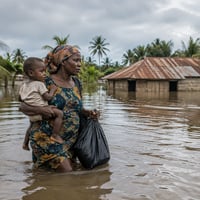
UNEP's Adaptation Gap Report 2026 says international public funding for climate adaptation in developing countries rose only slightly in 2024 and remains far below projected needs. Even a tripling of public adaptation finance would cover only part of those needs. The report also points to a shortfall in loss-and-damage resources and calls for stronger institutions and simpler funding procedures.
If you read one thing
A concise overview of the report’s funding gap, the limited reach of a tripling, and the loss-and-damage shortfall.
Best explainer
Adds detail on the shortfall facing least-developed countries and small island states, and on the fund’s unmet requests.
The evidence
Provides a contrasting estimate of annual adaptation needs and details on other funding flows.
The funding gap remains substantial: reported 2024 public adaptation finance is far below projected annual needs, and even planned increases would cover only part of them. Coverage also reports substantial unmet demand for loss-and-damage support; the precise needs estimates vary across reports.
International public adaptation finance for developing countries was estimated at $28.2 billion to $31.7 billion in 2024, about $1 billion above 2023.
Coverage gives differing estimates of annual adaptation needs: Anadolu reports about $305 billion by 2035, while CBC and Reuters report $420 billion by 2035. The reported goal of raising finance to $120 billion annually would still leave a large shortfall.
In the first round of the loss-and-damage fund, requests totaled $2.8 billion against an initial funding envelope of $342 million.
UNEP says more funding alone is insufficient and calls for stronger institutions, better coordination and simpler funding procedures. Separately, development-bank funding and flows between developing countries reached $9.6 billion in 2024, more than double their 2019 level.
About $305 billion annually by 2035
UNEP's estimate of developing countries' adaptation costs; reported by Anadolu and The Guardian.
$28.2 billion to $31.7 billion in 2024
Anadolu reports this as the estimated range for international public adaptation finance to developing countries in 2024.
$1 billion
The reported increase in international public adaptation finance from 2023 to 2024.
20% to 29%
Even tripling international public adaptation finance by 2035 would cover only this share of projected needs, according to the Anadolu report.
$420 billion a year by 2035
CBC and Reuters report this as projected adaptation finance needs, while Anadolu and The Guardian give an estimate of about $305 billion annually by 2035.
$2.8 billion in requests; $342 million in initial funding
The first round of the Fund for responding to Loss and Damage received requests totaling $2.8 billion against an initial funding envelope of $342 million.
$9.6 billion in 2024, up from $3.8 billion in 2019
Funding channelled through development banks and between developing countries, as reported by CBC and Reuters.
Contested Issue
The reported estimate of developing countries’ annual adaptation-finance needs by 2035 differs across coverage.
Anadolu and The Guardian report an estimate of about $305 billion annually by 2035.
CBC and Reuters report that needs are expected to reach $420 billion annually by 2035.
Coverage published on November 4 focused on UNEP’s Adaptation Gap Report 2026 and its finding that international public adaptation finance for developing countries rose only about $1 billion in 2024, to an estimated $28.2 billion to $31.7 billion, against projected annual needs of $305 billion by 2035. Reports emphasized that even a planned tripling of finance would cover only 20% to 29% of those needs. Coverage also described the loss-and-damage funding shortfall, with first-round requests totaling $2.8 billion against an initial $342 million, and highlighted UNEP’s calls for stronger institutions and simpler funding procedures. Some reporting added further detail on support for least-developed countries and growing finance from development banks and flows between developing countries.