
 AI Governance
 Data Centers
 Drones
 Climate
 Privacy
 2026 Maine Senate
 Bob Dylan

Climate: Featured Story
Coverage from 2 News Nevada, Us News, and others
Turkey’s Solar Boom Faces Coal Reliance Before COP31
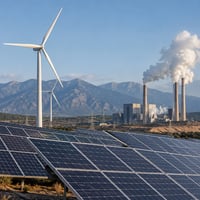
Turkey is highlighting solar and wind expansion as it prepares to host COP31 in Antalya on November 9–20, 2026. Coal nevertheless supplied 33% of electricity generation in the previous year, while campaigners say the country lacks a clear fossil-fuel phaseout roadmap despite its 2053 net-zero pledge. Turkey says the summit will focus on turning existing climate commitments into action.
If you read one thing
A comprehensive Associated Press report lays out the contrast between Turkey’s renewable-energy expansion, continuing coal dependence and COP31 priorities.
Coverage documents renewable expansion alongside continued coal reliance. COP31 priorities have been outlined, but the reporting does not establish a fossil-fuel phaseout plan or the summit’s eventual outcomes.
The Energy Ministry says coal supplied 33% of electricity in the latest reported year, while solar and wind together supplied nearly 23%. The Kalyon Karapinar solar plant, operating since 2023, generates power equivalent to about 0.7% of national demand.
Campaigners say Türkiye’s renewable-energy plans do not include a roadmap to phase out coal or other fossil fuels, and argue this conflicts with the country’s 2053 net-zero pledge. The coverage reports that claim, rather than a government confirmation that no such plan exists.
Türkiye’s stated COP31 focus is implementation of existing commitments, with priorities including support through a proposed “climate implementation bridge,” electrification, waste reduction and methane cuts. The summit is scheduled for November 9–20, 2026; its results remain unknown in this coverage.
The reporting describes contrasting signals on coal: a court annulled an environmental assessment for one planned plant expansion, while plans emerged to expand another. It does not establish the final status of either project.
33% of electricity generation in 2025
Turkey’s Energy Ministry reported that coal was the country’s largest source of electricity generation that year.
Nearly 23% of electricity generation in 2025
Turkey’s Energy Ministry reported that solar and wind together supplied nearly this share.
About 0.7% of national power demand annually
The Kalyon Karapınar solar plant’s director said its annual electricity output meets about this share of Turkey’s power demand.
584.5 million metric tons of CO₂ equivalent in 2024
Turkey’s total greenhouse gas emissions, according to the Turkish Statistical Institute; 2024 was the latest year for which data was available in the report.
Approximately 1.75 million metric tons of carbon emissions per year
The Kalyon Karapınar plant director said the plant prevents approximately this amount of emissions annually.
2053
Turkey’s stated target year for reaching net-zero emissions, cited by campaigner Duygu Kutluay.
Contested Issue
Whether hosting a COP while relying heavily on fossil fuels should count against the host or the summit’s prospects
Climate advocates criticized the decision to award COP31 to Turkey, which they describe as coal-reliant.
UN Climate Change Executive Secretary Simon Stiell defended the choice, saying a host country’s fossil-fuel status does not determine whether a summit succeeds and that Turkey and Australia could deliver a strong outcome.
Coverage published on November 5 largely carried an Associated Press account that set Turkey’s renewable-energy showcase ahead of COP31 against coal’s larger share of electricity generation. It quantified the Karapinar solar plant’s contribution and reported campaigners’ criticism that Turkey had no clear fossil-fuel phaseout roadmap despite its 2053 net-zero pledge. The same coverage described Turkey’s proposed focus on putting existing climate commitments into practice. On November 6, Euronews revisited the contrast and added emphasis on Turkey’s reported emissions, criticism of its climate targets, and scrutiny surrounding its role as summit host. Much of the burst repeated the same AP reporting rather than introducing a materially different account.