
 AI Governance
 Data Centers
 Drones
 Climate
 Privacy
 Bob Dylan

Climate: Featured Story
Coverage from Newsday, Oskaloosa Herald, and others
Nations Seek Deeper Fossil Fuel Cuts at UN Summit
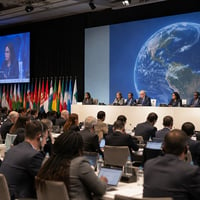
As the two-week UN climate summit in Antalya concludes, negotiators are seeking stronger commitments to cut fossil fuel emissions, but the talks have made little progress on major steps away from coal, oil and gas. Disagreements also concern the adequacy of funding for vulnerable countries and a proposed electricity-use target that would still permit fossil fuel generation. Climate Action Tracker says progress has stalled and projects 2.6°C of warming by 2100 under current pledges, beyond the Paris Agreement's 1.5°C goal.
If you read one thing
A concise, broad account of the summit’s unresolved fossil-fuel talks, funding concerns, electricity target and Climate Action Tracker projection.
Best explainer
Adds detail on Panama’s demands, objections to the electricity target and the concerns voiced by vulnerable countries.
The evidence
Reports that the draft final agreement omitted the words “fossil fuels,” while making clear the final outcome was not yet established.
Reports from the summit’s scheduled final day describe unresolved negotiations and concerns about the draft and proposals, but do not establish what the final agreement ultimately said.
Coverage reported little progress on major measures to move away from fossil fuels. One account said the draft final agreement omitted the words “fossil fuels,” prompting objections; the available reporting does not establish whether that language changed in the final text.
A proposed target would raise electricity’s share of global energy use from roughly 21% to 35% by 2035, but would not require that the added electricity come from renewables and could allow fossil-fuel generation.
Leaders from vulnerable countries said the UN fund for climate-disaster recovery and adaptation was inadequate. Reports also noted that the United States was absent from the summit for a second consecutive year.
Climate Action Tracker said progress in slowing warming had stalled over the preceding five years and projected 2.6°C of warming by 2100 under current pledges, above the Paris Agreement’s 1.5°C goal.
Roughly 21% to 35% by 2035
A proposed target would increase electricity’s share of total global energy consumption from roughly 21% today to 35% by 2035; it does not rule out fossil-fuel generation.
2.6°C (4.7°F) by the end of the century
Climate Action Tracker projected this level of warming relative to pre-industrial times without drastic emissions reductions beyond countries’ existing pledges.
1.5°C (2.7°F)
The Paris Agreement’s warming limit above pre-industrial temperatures; the article says current progress puts the world on track to overshoot it.
Five years
Climate Action Tracker said progress in slowing global warming had essentially stalled for the past five years.
Coverage published Nov. 19 focused on objections after the draft summit agreement omitted the term “fossil fuels,” while noting that the available account did not report a final outcome. Coverage published Nov. 20 described negotiations as still short of major steps away from fossil fuels and added detail on the disputed electricity-use target, vulnerable countries’ concerns about funding, Panama’s demands, and Climate Action Tracker’s warning about stalled progress and projected warming under current pledges.