
 AI Governance
 Data Centers
 Drones
 Climate
 Privacy
 2026 Maine Senate
 Bob Dylan

Climate: Featured Story
Coverage from The Next Web, Fuel Cells Works, and others
Google's Wyoming Data Center to Use Gas, Carbon Capture
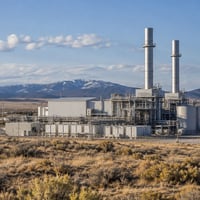
Google plans to invest $17 billion in its first Wyoming data center, near Cheyenne, with much of its electricity expected to come from a planned natural-gas fuel-cell plant. Carbon from the plant is intended for underground storage, but Google has not disclosed an expected capture rate. The project also includes other contracted power supplies, air cooling, and funding for required grid upgrades.
If you read one thing
A concise overview of the gas-powered data center plan, intended carbon storage, undisclosed capture rate, and grid-upgrade commitments.
The evidence
Adds detail on the fuel-cell agreement and clarifies that capture performance and final equipment details remain undisclosed.
Best explainer
Explains the broader power portfolio and notes uncertainties around project capacity, schedule, and environmental performance.
The data center and its power and storage arrangements are planned, not yet operating. The fuel-cell plant is targeted for full operation by the end of 2028, while key details of the data center’s schedule and environmental performance remain undisclosed.
Google’s announced investment is $17 billion for a campus in Laramie County near Cheyenne. It has not disclosed the data center’s final computing capacity or a complete construction schedule.
A planned 702 MW Bloom Energy fuel-cell facility, developed by AEP under a 20-year power agreement, is intended to use natural gas. Google is also set to obtain power from gas generators operated by Tallgrass and Black Hills; the fuel-cell plant’s full operation is targeted by the end of 2028.
Carbon from the fuel-cell plant is intended for permanent underground storage at Tallgrass Energy’s Eastern Wyoming Sequestration Hub. Google has not disclosed a specific capture rate, and a separate study is evaluating capture on Tallgrass’s combined-cycle turbines.
Google says the campus will use air cooling and that it will pay for the power it consumes and required infrastructure costs. The project’s eventual emissions performance remains uncertain; coverage notes that the capture system and storage arrangements are still planned and that broader lifecycle emissions have not been established.
$17 billion
Google’s announced long-term investment in its first Wyoming data center campus near Cheyenne.
702 MW
Planned natural-gas fuel-cell installation from Bloom Energy, to be developed by AEP as a major source of power for the campus.
20 years
Term of the power agreement under which Google is to buy electricity from the planned fuel-cell facility.
End of 2028
Target for the planned fuel-cell facility to reach full operation; this is not a stated data-center opening date.
About $4 billion
AEP’s planned investment in the 702 MW fuel-cell project.
100%
Google says it will pay for all electricity the data center uses.
Nearly 1 GW
Google says its contracted carbon-capture capacity associated with power generation will reach nearly this level; it is not a stated carbon-capture rate for the Wyoming plant.
Contested Issue
Whether carbon capture is planned for gas generation beyond the 702 MW fuel-cell plant
Carbon Herald reports that emissions from the fuel-cell installation and adjacent power infrastructure will be captured and stored.
Other coverage describes capture as planned for the fuel-cell plant, while saying capture on Tallgrass’s gas turbines is only being evaluated in an engineering study.
Coverage first reported Google’s $17 billion plan for its first Wyoming data center alongside a planned 702 MW natural-gas fuel-cell plant, with carbon intended for underground storage. Subsequent reporting added detail on AEP’s 20-year power agreement and the plant’s targeted end-of-2028 operation, while noting that Google had not disclosed a capture rate. Coverage also described other planned gas-generation supplies, a study of possible carbon capture on Tallgrass turbines, air cooling, and Google’s commitment to fund its power use and required infrastructure.