
 AI Governance
 Data Centers
 Drones
 Climate
 Privacy
 Bob Dylan

Climate: Featured Story
Coverage from CKPG Today, The Lethbridge Herald - News and Sports from around Lethbridge, and others
Former Ministers Accuse Dabrusin of Lying on Paris Targets
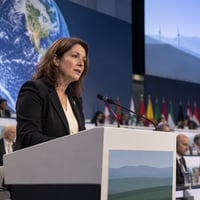
At COP31 in Antalya, Environment Minister Julie Dabrusin reaffirmed Canada's commitment to its Paris climate targets, while former environment ministers Catherine McKenna and Steven Guilbeault challenged whether the targets remain achievable. Government figures show emissions were 10.3 per cent below 2005 levels in 2024, and Environment Commissioner Jerry DeMarco projected a 28 per cent reduction by 2030, short of Canada's 40-to-45-per-cent target. The disagreement centers on emissions projections and the effect of federal climate policy changes; Dabrusin's office points to clean-energy investment and other measures.
If you read one thing
The master coverage brings together the former ministers’ challenge, emissions figures and projections, and the government’s response.
Canada’s latest reported emissions reduction and the environment commissioner’s projection put the country short of its 2030 target, while the government continues to say it is committed to its climate goals. The 2030 figure is a projection, not a final outcome.
Government figures show emissions in 2024 were 10.3 per cent below 2005 levels, compared with the 2030 target of a 40-to-45-per-cent reduction.
Environment Commissioner Jerry DeMarco’s projections indicate a 28 per cent reduction by 2030, taking account of federal climate-policy changes and rollbacks; the reporting does not establish what the final 2030 emissions level will be.
Dabrusin’s office says Canada stands by the Paris Agreement and its 2050 net-zero goal, citing clean-energy projects, electrification, grid expansion and low-carbon investment.
McKenna and Guilbeault dispute the government’s assurance that Canada remains committed to meeting the targets, citing projections and other analyses; their accusations are claims in the political dispute, not an independent finding about Dabrusin’s intent.
10.3 per cent below 2005 levels in 2024
Government figures reported Canada’s emissions reduction from the 2005 baseline as of 2024.
28 per cent by 2030
Environment Commissioner Jerry DeMarco reported that government projections, accounting for federal climate-policy rollbacks, indicate this emissions reduction from 2005 levels.
40 to 45 per cent below 2005 levels by 2030
Canada’s stated emissions-reduction target, against which the commissioner’s 28 per cent projection falls short.
Net-zero emissions by 2050
The federal government’s stated net-zero goal; the articles also report that Canadian Climate Institute modelling suggests Canada will not achieve it.
78 million tonnes over 21 years
The reported decrease in Canada’s total emissions over the period described in the government figures.
$50 billion, including $38 billion in tax credit measures
Dabrusin’s office cited the federal budget commitment and the portion allocated to tax-credit measures.
Contested Issue
Whether Canada’s Paris targets remain achievable and whether the government’s stated commitment is credible
Environment Minister Julie Dabrusin and her office said Canada remains committed to its Paris targets and net-zero by 2050, citing clean-energy projects, electrification, investment and grid expansion as part of its plan.
Former environment ministers Catherine McKenna and Steven Guilbeault said the commitment was not credible given the available analyses; McKenna called it factually untrue and said Canada had no chance of meeting its 2030 commitment, while Environment Commissioner Jerry DeMarco’s projections put the 2030 reduction at 28 per cent, below the 40-to-45-per-cent target.
Coverage focused on the clash between Julie Dabrusin’s reaffirmation of Canada’s Paris commitments and former environment ministers Catherine McKenna and Steven Guilbeault’s contention that the targets are not achievable under current projections. Reports cited government figures showing emissions 10.3 per cent below 2005 levels in 2024 and Environment Commissioner Jerry DeMarco’s projection of a 28 per cent reduction by 2030, against a 40-to-45-per-cent target. They attributed the projection in part to federal climate-policy changes, while also reporting Dabrusin’s office’s defence of the commitment and its emphasis on clean-energy projects, electrification and investment.