
 AI Governance
 Data Centers
 Drones
 Climate
 Privacy
 2026 Maine Senate
 Bob Dylan

Climate: Featured Story
Coverage from Nation Path India, India Today, and others
Cabinet Clears ₹14,500 Crore Scheme for 92 GWh Storage
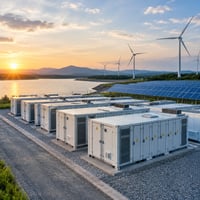
India's Union Cabinet approved ₹14,500 crore in viability gap funding for 92 GWh of grid-scale energy storage, with implementation planned from FY 2026–27 through FY 2030–31. The planned capacity comprises 60 GWh of pumped storage, 30 GWh of battery storage and 2 GWh of emerging technologies, with total project investment estimated at ₹97,600 crore. The scheme is intended to support renewable integration and grid reliability, while a 40% domestic content requirement applies to supported battery projects.
If you read one thing
A concise account of the Cabinet approval, funding, capacity mix, competitive bidding and domestic-content condition.
Best explainer
Explains how pumped storage and batteries serve different grid needs, and highlights delivery challenges including clearances and domestic cell supply.
Latest development
The latest-dated coverage adds context on India’s projected storage requirement and the gap between that need and currently reported battery capacity.
The funding framework and broad project mix have been approved, but the planned capacity is yet to be commissioned; delivery depends on project allocation and construction.
The scheme provides ₹14,500 crore in viability-gap funding for 92 GWh of new storage, with total project investment estimated at ₹97,600 crore.
Planned capacity is 60 GWh of pumped storage, 30 GWh of battery storage and 2 GWh of alternative technologies, for implementation from FY 2026–27 through FY 2030–31.
Capacity is to be allocated through tariff-based competitive bidding. Public and private distribution companies may receive support for battery and pumped-storage projects; alternative-technology projects may be implemented by public or private entities.
Supported battery projects must meet a minimum 40% domestic-content requirement, linking funding to the government’s stated goal of strengthening local manufacturing and reducing import dependence.
The approval sets a planned build-out, not completed capacity. Coverage identifies project allocation, investment and construction as necessary steps, so delivery and its intended reliability and renewable-integration benefits remain ahead.
₹14,500 crore
Approved viability gap funding for the grid-scale energy storage scheme.
92 GWh
Planned support for new, yet-to-be-commissioned grid-scale storage capacity; actual additions depend on project construction and commissioning.
60 GWh pumped storage; 30 GWh battery storage; 2 GWh alternative technologies
The planned breakdown of the scheme’s 92 GWh capacity.
₹97,600 crore
Estimated total investment expected for the supported projects, separate from the ₹14,500 crore in viability gap funding.
FY 2026–27 to FY 2030–31
The scheme’s planned implementation period.
40%
Minimum domestic content requirement for battery energy storage projects supported by the scheme.
411 GWh by 2031–32
The government’s projected requirement for India’s grid-scale energy storage capacity; the scheme is intended to contribute toward meeting it.
Coverage published on November 4 reported the Cabinet’s approval of ₹14,500 crore in viability-gap funding for 92 GWh of storage, with a mix of pumped storage, batteries and alternative technologies. Reports that day also described competitive bidding, the estimated project investment and the 40% domestic-content requirement for battery projects. Articles published on November 5 and 6 restated the scheme’s terms and explained its intended role in renewable integration and grid reliability. By November 8, coverage added more detail on allocation and the scheme’s policy background, while also discussing implementation challenges such as clearances, construction timelines and domestic battery capacity. November 9 coverage connected the plan to India’s projected storage needs and energy security.
- 11-04-2026
Initial coverage reported the Cabinet’s approval of ₹14,500 crore in viability-gap funding for 92 GWh of grid-scale storage. Reports detailed the planned technology split, the estimated ₹97,600 crore investment, tariff-based competitive bidding and the 40% domestic-content requirement for battery projects.
- 11-05-2026
Follow-up reports reiterated the scheme’s capacity mix and funding period, and described its intended contribution to renewable integration, grid reliability and domestic manufacturing.
- 11-06-2026
Coverage added further detail on competitive bidding, which entities could receive support, and the battery projects’ domestic-content requirement, alongside the scheme’s stated goals for power-system flexibility and renewable use.
- 11-08-2026
A later account situated the scheme alongside earlier storage-support rounds and discussed implementation considerations, including pumped-storage clearances and construction timelines, battery capacity and discom participation.
- 11-09-2026
Coverage connected the 92 GWh plan to India’s projected storage requirement by 2031–32 and framed the scheme as a measure for renewable integration, power reliability and energy security.
Articles in this story are part of a shaping these topics.