
 AI Governance
 Data Centers
 Drones
 Climate
 Privacy
 Bob Dylan

Climate Quick Briefing
2026-10-27
Climate Progress Hinges on Delivery as Physical Risks Accumulate
of Play
Grid constraints and uncertain legal and financing arrangements continue to separate climate ambition from delivery. New research adds evidence of worsening snow drought on the Mongolian Plateau, while a new inequality analysis reinforces questions about who causes and bears climate harm. Neither establishes a change in the global emissions trajectory or resolves the effectiveness of adaptation.
What's New?
Clean-power outcomes remain constrained by grid integration
Grid bottlenecks in India and Southeast Asia remain central to whether renewable capacity becomes usable electricity. Capacity additions alone do not establish fossil-fuel displacement or an absolute emissions decline.


Adaptation depends on affordability and service continuity
Climate exposure and the costs of responding to it remain unevenly distributed. California’s wildfire-mitigation costs are largely recovered from ratepayers, while coastal exposure threatens households and a tax base supporting services in Plymouth. These are persistent pressures, not newly established deterioration.
Climate liability remains legally uncertain
The previously tracked Supreme Court climate-liability question remains unresolved in the supplied evidence. Its outcome matters for the scope of state-law claims, but no substantive disposition is established here.

What's Changed?
Research adds a regional signal of intensifying snow drought
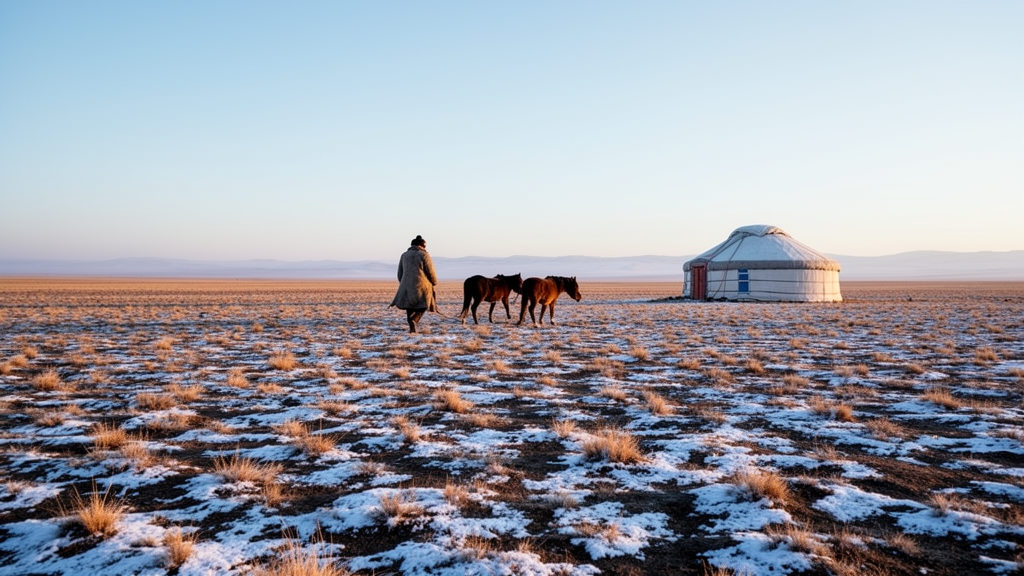
A newly reported analysis of 1951–2024 data finds snow drought became more frequent and severe across the Mongolian Plateau after 2000, especially in central and southern dry regions. This strengthens the evidence for regional water and livelihood risk; it is not evidence of a new drought in the past day.
New inequality estimate adds to the cost-allocation debate
Oxfam estimates that the richest 1% account for 20% of global warming since 1990. The estimate adds a global attribution perspective to the existing concern about unequal climate burdens, but the two reports provided draw on the same analysis rather than independently corroborating it.


What Matters?
Infrastructure delivery remains the test of transition progress
The grid evidence supports the prior assessment that clean-energy investment and emissions reductions are distinct milestones. Without connections and system flexibility, new capacity may not translate into reliable generation that displaces fossil power.
Physical risk and cost allocation require separate responses
The snow-drought finding broadens the prior adaptation picture beyond heat and infrastructure costs to snow-dependent water supplies. The Oxfam estimate reinforces the distinction between responsibility for warming and exposure to harm, but it does not establish that proposed taxes or financing measures will be adopted.
What's Next?
Test whether grid investment closes the delivery gap
Watch for commissioned connections and flexibility followed by lower curtailment and measurable fossil-generation displacement. Those outcomes would strengthen the case that integration constraints are easing; capacity announcements alone would not.
Watch the scope of climate-liability decisions
The existing Supreme Court watchpoint remains open. A substantive decision on whether state-law climate claims can proceed, and on the breadth of federal preemption, would materially alter the assessment of potential liability.
Look for adaptation outcomes, not just spending
Watch whether risk-reduction measures demonstrably limit harm and service disruption without transferring unaffordable costs to households. Improved snow monitoring or forecasting would be useful, but effectiveness depends on whether it changes water-management outcomes.