
 AI Governance
 Data Centers
 Drones
 Climate
 Privacy
 Bob Dylan

AI Governance: Featured Story
Coverage from Fortune, Aol, and others
Jensen Huang's Exit Tests AI Boom
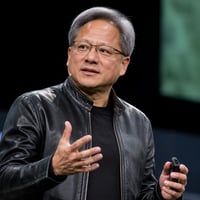
Nvidia CEO Jensen Huang's reported departure has put the company's leadership continuity and influence across the AI industry under scrutiny. Investors and analysts are weighing possible effects on chip supply, Nvidia-backed AI and cloud businesses, and the pace of AI investment. The departure may also affect debate over semiconductor export controls and data-center policy, but those outcomes remain uncertain.
If you read one thing
A broad analysis of how Huang’s exit could test AI investment, Nvidia-backed financing, data-center spending and policy.
Best explainer
Details the policy influence Huang leaves behind, congressional pressure on chip exports and the open-model debate.
The evidence
Reports the immediate market response and analyst views on supplier diversification, Nvidia’s rivals and interconnected financing.
The immediate response has brought questions and policy pressure, rather than established changes to Nvidia’s market position or the wider AI investment outlook.
Nvidia’s board appointed CFO Colette Kress as interim CEO and is considering internal and external candidates for a permanent successor; how the company will fare without Huang remains unresolved.
Nvidia remains a leading supplier of AI chips. Rival chipmakers’ shares rose after the news, and analysts say customers could diversify, but coverage does not establish that buyers have shifted suppliers or that rivals have closed the technology gap.
Nvidia’s investments in companies that buy or rent access to its chips, including CoreWeave, are receiving closer scrutiny. Coverage raises questions about whether Nvidia-backed financing will continue, but its longer-term effects on AI companies and spending remain uncertain.
Huang’s departure has added momentum to calls for tighter semiconductor export controls, and lawmakers are pressing officials on restrictions and oversight. The coverage describes proposals and political pressure, not enacted policy or settled effects on chip access.
33 years
Fortune reported that Huang had led Nvidia for 33 years before his departure.
$1 trillion by year-end
Huang predicted Nvidia would face a $1 trillion chip-order backlog by the end of the year; the AP report said this doubled his estimate from a year earlier.
Nearly 13%
Nvidia's reported stake in CoreWeave, a company that buys Nvidia chips and rents computing access to customers.
Roughly $900 billion over the next several decades
Fortune reported that Anthropic's S-1 filing disclosed this amount in compute spending commitments.
Upwards of $60 billion
Fortune reported that Anthropic was seeking to raise this amount in its planned IPO.
$1.3 trillion
The AP report described Anthropic's pending IPO as valued at this amount; Fortune separately reported that its valuation could exceed $1.4 trillion, so coverage gave different estimates.
Could exceed $1.4 trillion
Fortune's reported potential Anthropic IPO valuation; the AP report gave a different estimate of $1.3 trillion.
Contested Issue
Whether Huang's departure materially threatens Anthropic's planned IPO and prospects
A startup founder told Fortune the Nvidia turmoil raises the stakes for Anthropic's IPO: if it and a later OpenAI IPO go poorly, that could raise questions about whether AI companies can become profitable.
Venture investor Karl Alomar told Fortune that Anthropic remained in as strong a position as before the news, with strong business figures and excess capacity, and he did not expect a massive impact.
Whether tighter licensing or restrictions on open-source AI models are likely after Huang's departure
Policy analyst Ed Mills said the scandal could help push Washington toward licensing requirements or restrictions on open-source models, arguing that lawmakers may see them as relevant to competing with China.
AI-regulation advocate Brad Carson said he was less certain and considered licensing requirements unlikely, citing support for open-source AI among some members of Congress and the technical difficulty of effective rules.
Coverage published November 12 framed Huang’s departure as a stress test for the AI boom, connecting his role in financing AI companies and advocating on policy to questions about investment, data-center scrutiny, export controls and the upcoming Anthropic IPO. Reporting published November 13 broadened the focus to Nvidia’s leadership transition and market position: analysts discussed possible customer diversification and opportunities for chip rivals, while noting Nvidia’s continuing technological lead and the AI industry’s reliance on its ecosystem. Coverage also examined the company’s investments in chip-buying firms and the possibility of stronger export restrictions. The potential effects remained uncertain, with reporting differing in emphasis: some highlighted risks to financing and policy influence, while others stressed that the market response was relatively muted or that companies such as Anthropic might remain resilient.
Articles in this story are part of a shaping these topics.