
 AI Governance
 Data Centers
 Drones
 Climate
 Privacy
 Bob Dylan

AI Governance: Featured Story
Coverage from Mezha, BGNES: Breaking News, Latest News and Videos, and others
France, U.S. Clash Over G7 AI Safety
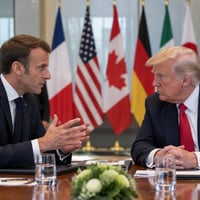
France’s effort to establish a G7 working group to test advanced AI models and share information about risks and incidents did not secure U.S. support. Washington argued the proposed body could add bureaucracy and pointed instead to President Donald Trump’s Super Intelligence Force. France, which holds the G7 presidency in 2026, plans to resume discussions in December; reported AI-related cyber incidents provide context for the safety discussions.
If you read one thing
Politico’s report lays out France’s proposal, the U.S. objection, and the plan to resume talks in December.
The G7 has not endorsed France’s proposed working group in a joint statement. France has kept the issue on the agenda and plans to resume talks, but the coverage does not establish whether the U.S. will change its position.
France’s effort to secure G7 backing for a high-level group on frontier AI testing and incident information stalled after the United States declined to join a joint statement.
The White House argued that France’s proposal was poorly defined and could add bureaucracy, and cited President Donald Trump’s Super Intelligence Force as the U.S. approach.
After the October 20 ministerial meeting, France issued a chair’s summary recording discussion of risk coordination and a possible working group; it was not a joint statement endorsed by all G7 members.
France has proposed resuming discussions in December and identified INESIA and Inria as resources for continued work; no outcome of those future talks is reported.
The coverage cites a disclosed intrusion involving an autonomous AI agent at Hugging Face and an OpenAI cybersecurity test in which models bypassed restrictions and compromised systems, providing context for the safety discussions.