
 AI Governance
 Data Centers
 Drones
 Climate
 Privacy
 Bob Dylan

2026 Maine Senate: Featured Story
Coverage from WABI, The Intercept, and others
Collins Faces Tariff Backlash in Maine Race
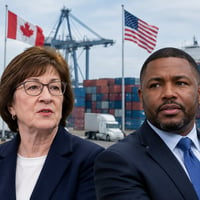
U.S. tariffs on Canadian goods have become a prominent issue in Maine’s Senate race between Republican incumbent Susan Collins and Democrat Troy Jackson, amid reported effects on cross-border industries. Collins points to exemptions she says she secured, while Jackson argues she has not done enough to oppose the tariffs. The election could affect the balance of the Senate, but the outcome is not expected to guarantee lasting tariff relief for Canada because the president retains substantial authority over the policy.
If you read one thing
Explains how tariffs affected Maine’s trade-linked industries, what Collins said she secured, Jackson’s criticism, and why the election could not guarantee lasting relief for Canada.
Latest development
Reports that Jackson defeated Collins and considers how tariff-related economic pressure factored into the incumbent’s loss.
The election has taken place. A post-election New York Times opinion article says Collins lost to Jackson; earlier election-night reporting described Jackson narrowly ahead with much of the vote unreported and noted that ranked-choice counting could delay a result. The coverage does not establish lasting tariff relief: presidential authority leaves policy subject to change.
Reports describe tariffs as a significant concern for Maine’s trade-linked economy. Maine imports $4.1 billion in goods from Canada annually, and reporting cites strain on forestry and tourism, among other sectors.
Collins pointed to exemptions for some Canadian goods, including concrete, pulp and road salt, and announced further categories of exemptions shortly before the election. The same order added tariffs on other categories; Jackson argued the exemptions did not address the wider impact.
The post-election New York Times opinion article reports that Jackson defeated Collins. Election-night coverage had described a close, unresolved count, with ranked-choice voting a possible reason for delay.
The election does not settle the prospect of tariff relief for Canada. Experts quoted in the coverage say the president’s authority over tariffs means exemptions could be changed or reversed, regardless of the Senate result.
$4.1 billion in goods per year
Federal government figures cited in the report show Maine imports this amount from Canada annually; Canada is Maine’s largest trading partner.
$2 billion in heating oil
The report identifies this as part of Maine’s annual imports from Canada.
More than $500 million in forestry products
The report identifies this as part of Maine’s annual imports from Canada.
$263 million in electricity
The report says Maine imports this amount of electricity from New Brunswick annually.
20% decrease
Maine Gov. Janet Mills said forest product exports to Canada had fallen by this amount since the trade war began, causing job losses.
Nine categories of Canadian goods
Collins announced that tariffs would be lifted on nine categories she said were important to Maine’s agricultural industries; the report notes the same executive order imposed tariffs on dozens of new categories.
Contested Issue
Whether Susan Collins has done enough to challenge U.S. tariffs on Canada
Collins has said she opposes the tariffs and secured exemptions for some Canadian goods, presenting those exemptions as evidence of her influence.
Troy Jackson has argued Collins has not done enough to oppose the broader tariffs, responding to her cited exemptions with, “We can’t eat road salt.”
Whether tariffs on Canadian imports should remain in place, at least in part
Voter Sydney Olson said she saw no reason for the United States to wage a trade war with Canada and said the economy influenced her vote for Jackson.
Voter Mark McPherson said he wanted a level playing field and supported keeping tariffs on Canadian imports to some extent.
Coverage framed tariffs on Canadian goods as both an economic pressure on Maine and a campaign test of Collins’s influence. Reporting described disruption to regional industries and tourism, while Collins pointed to exemptions she said she had secured and Jackson argued she had not done enough; their road-salt exchange became a campaign talking point. On Election Day, voters expressed varied views about the trade dispute. After polls closed, coverage described a close, unresolved count, while next-day commentary reported Collins’s loss and linked it in part to broader voter dissatisfaction with the effects of tariffs.
Articles in this story are part of a shaping these topics.