
 AI Governance
 Data Centers
 Drones
 Climate
 Privacy
 Bob Dylan

2026 Maine Senate Quick Briefing
2026-11-02
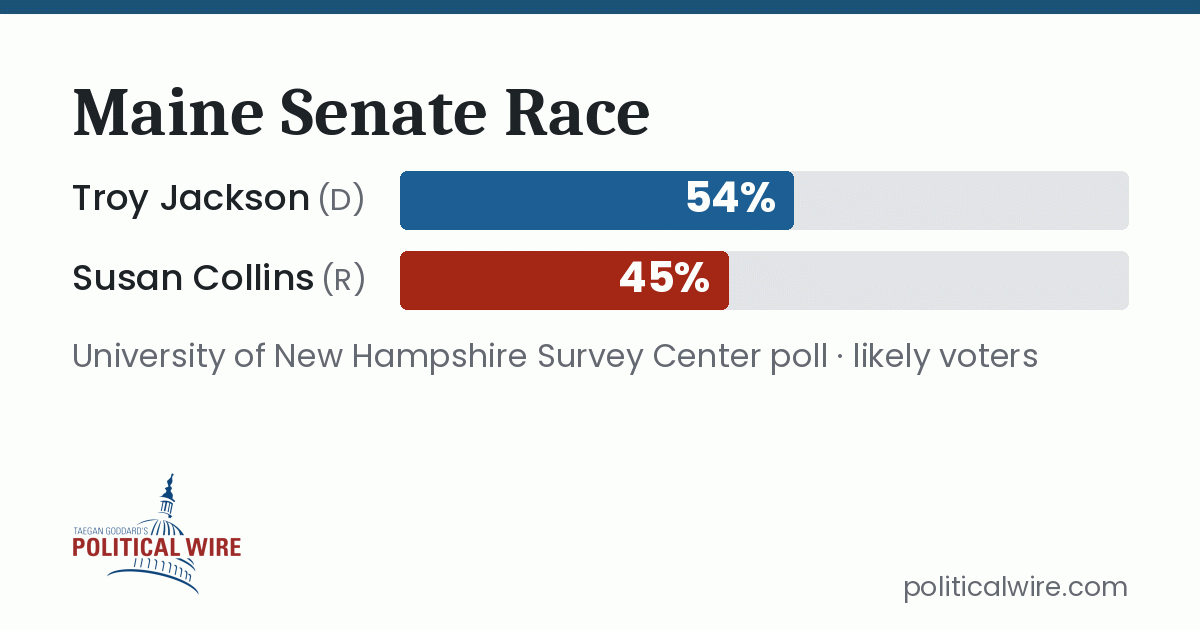
Maine’s Senate Race Remains Competitive as Late Movement Is Unclear
of Play
Jackson’s earlier polling advantages have not established a secure lead, while Collins retains a local-effectiveness argument under pressure from national political liabilities. A new headline suggests Jackson may be pulling away, but the supplied evidence lacks the details needed to revise the close-race assessment. Final polling and, especially, actual votes will determine whether either candidate converted those competing strengths into a winning coalition.
What's New?
A competitive race without a secure leader
Earlier surveys often gave Democrat Troy Jackson a narrow numerical advantage over Republican Sen. Susan Collins, but other polling favored Collins. The available evidence does not establish a decisive late lead for either candidate.

Collins’s local appeal competes with national-policy liabilities
Collins’s federal-funding and bipartisan reputation remains an asset, while Jackson emphasizes healthcare and living costs. In an early-October poll, voters favored Jackson on those issues and abortion, even as Collins led on securing federal dollars.
What's Changed?
A claim of a widening Jackson lead is not yet assessable
A new Political Wire headline says Jackson is pulling away, but the available article record supplies no poll figures or methodology. Compared with the prior assessment of a close race, this is a signal to investigate, not evidence sufficient to establish a meaningful shift.
What Matters?
Local effectiveness may not fully insulate Collins
The earlier poll found a substantial Collins advantage on federal funding but also found that 58% considered her too supportive of Trump’s Senate agenda. Her path depends in part on whether local credibility outweighs national-party concerns among persuadable voters; the evidence does not establish that it will.
Polling advantages should not be treated as votes banked
Mixed survey results and Maine’s history of underestimating Collins limit confidence in a narrow polling lead. The unresolved question is how surveyed preferences translate into participation and votes, not merely which candidate led an individual poll.
What's Next?
Test the reported late lead against final surveys and votes
Watch for the underlying survey behind the claim that Jackson is pulling away, including its dates and methodology, and for independent corroboration. The November 3 result will ultimately test the earlier polling advantage and turnout assumptions.
Assess Collins’s crossover support
Watch whether credible post-election evidence shows Collins retaining enough independent and Democratic support to offset national Republican liabilities. The earlier Washington Post-Schar survey had Jackson ahead among independents, so Collins’s historical appeal alone does not resolve the question.