
 AI Governance
 Data Centers
 Drones
 Climate
 Privacy
 2026 Maine Senate
 Bob Dylan
Self-Checkout Surveillance Reshapes Retail Trust
Coverage from Upworthy, The Sun, and others
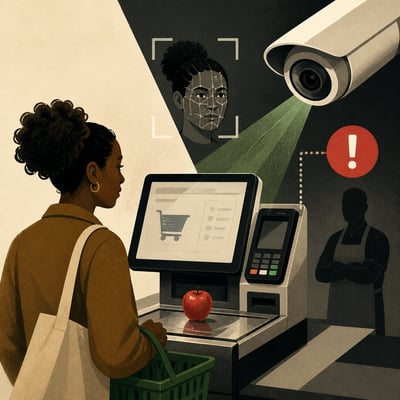
Self-checkout has shifted scanning, bagging, and troubleshooting from grocery employees to customers while adding cameras, weight sensors, and automated loss-prevention monitoring.
The technology creates a tradeoff between speed, autonomy, and purchase privacy on one hand, and increased surveillance, possible racial misidentification, reduced human contact, and heavier workloads for remaining staff on the other. The central issue is whether retailers can improve loss prevention without weakening customer trust and perceived fairness.
The story is reframed from primarily a surveillance and bias critique toward a broader tradeoff between checkout efficiency, shopper autonomy, privacy, and trust. Named retailer examples, including Walmart and Grocery Outlet, make the deployment claims more concrete.
The story has broadened from a general critique of self-checkout surveillance to a more concrete account of the tools and actors involved, including facial recognition, less visible monitoring tactics, and local policy responses. It also newly emphasizes that regulation remains fragmented rather than comprehensive.