
 AI Governance
 Data Centers
 Drones
 Climate
 Privacy
 2026 Maine Senate
 Bob Dylan
Palantir NHS And Police Scrutiny
Coverage from Tech Policy Press, EL PAÍS USA Edition, and others
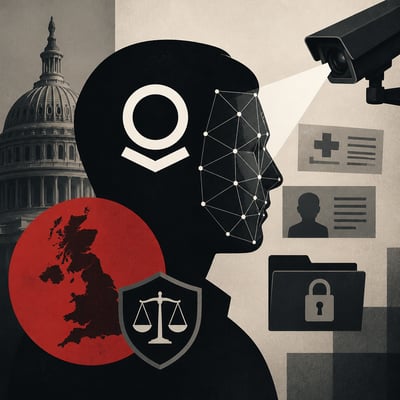
Palantir is facing sustained scrutiny in the UK over its role in sensitive public-sector data systems, especially the NHS Federated Data Platform and the Metropolitan Police’s internal monitoring tools.
Critics say the company’s interoperable software could increase surveillance, weaken trust, and make cross-agency data sharing easier, while Palantir and its public-sector clients argue the systems improve efficiency, oversight, and service delivery. The topic is defined by a clear privacy-versus-utility conflict, with unions, health campaigners, and some local bodies pushing back against adoption.
The story now centers more sharply on UK institutions, adding a new police-workforce surveillance dimension alongside NHS data concerns. Local NHS resistance has also become more concrete, with some bodies holding back or questioning adoption.
The story broadens beyond health, regulation, and immigration enforcement into humanitarian operations through Palantir’s World Food Programme partnership. It also gains a new pressure dimension as shareholder scrutiny and political backlash join civil-society criticism.
The story now extends beyond health, finance, and immigration into workplace monitoring, reinforcing the broader concern about repeated deployment of analytics over sensitive personal data. The underlying governance disputes and level of scrutiny remain largely unchanged.
The story now puts heavier emphasis on whether Palantir-linked public-sector systems create broader access paths to sensitive data, especially through contractor access, encryption-key control, and cross-border exposure. It also adds a clearer governance dimension, with oversight and procurement outcomes described as uneven rather than uniformly advancing.
Public-sector use of Palantir systems is drawing sustained privacy scrutiny across the UK and US, with disputes over health data sharing, financial regulator data processing, immigration enforcement analytics, and police officer monitoring. The recurring issue is whether contractual controls are enough to prevent broader access, repurposing, or surveillance uses of sensitive personal data.