
 AI Governance
 Data Centers
 Drones
 Climate
 Privacy
 2026 Maine Senate
 Bob Dylan
Oconee County Flock Camera Ban
Coverage from FITSNews, Fox Carolina, and others
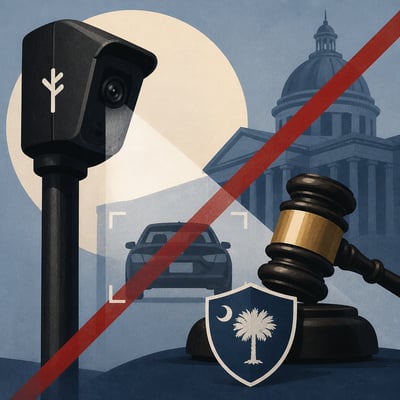
Oconee County, South Carolina, finalized a ban on Flock and similar automated license plate surveillance systems using county funding, property, personnel, and road rights-of-way.
The decision followed reported misuse, concerns about searchable vehicle movements and third-party retention, and continuing debate over the cameras' investigative value.
If you read one thing
It clearly explains the finalized county ban and its implications for Flock cameras and local surveillance policy.
The evidence
It provides concrete reported misuse and search examples that explain why access controls and privacy concerns became central.
Best explainer
It connects the ban's legal and privacy rationale with the continuing investigative and missing-person arguments for Flock cameras.
County restriction is now finalized
Oconee County Council approved the anti-mass-surveillance ordinance 4-1, converting the restriction from a pending proposal into finalized county policy. It bars county funding, property, personnel, and road rights-of-way from supporting Flock and similar automated license plate systems, although municipal and privately operated cameras may remain outside its scope.
Misuse and privacy concerns are driving tighter controls
Concern over searchable vehicle movements, retention, access controls, and personal or deceptive searches remains the central constraint on the technology. Reports of alleged stalking, repeated searches, and employee misuse have intensified scrutiny of auditability and government support for the systems.
Investigative utility remains the counterweight
Law enforcement and supportive coverage continue to present Flock cameras as useful for crime-solving and missing-person investigations. Those claimed operational benefits remain the principal counterweight to broader limits on networked license-plate surveillance.
The new articles reiterate that Oconee County finalized its Flock camera restrictions and repeat previously reported privacy and misuse concerns without showing a further material change.
Previously
Oconee County Council is advancing an ordinance that would prevent county funds, property, personnel, contracts, and road rights-of-way from supporting Flock Safety and similar mass-surveillance systems. Supporters cite privacy, civil-rights, retention, and potential misuse concerns, while the sheriff’s office says the cameras have helped solve crimes and locate missing people. The measure remains subject to a final reading, with consideration scheduled for September 15, 2026, and would not necessarily remove cameras operated by municipalities or private owners.
The proposed restriction became a finalized 4-1 county ordinance, converting pending legislation into an implemented policy. Newly reported unauthorized searches, alleged stalking, and employee misuse strengthened the scrutiny behind the measure.
The ordinance has advanced beyond its previously reported first reading, moving closer to final consideration while retaining its September 15 schedule. The current version also clarifies that county personnel and preserved camera data are part of the ongoing resource and accountability dispute.